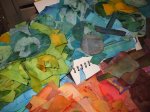
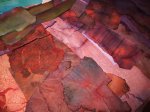
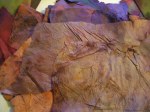
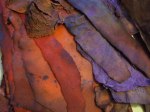
watching paint dry

…and photographing it!

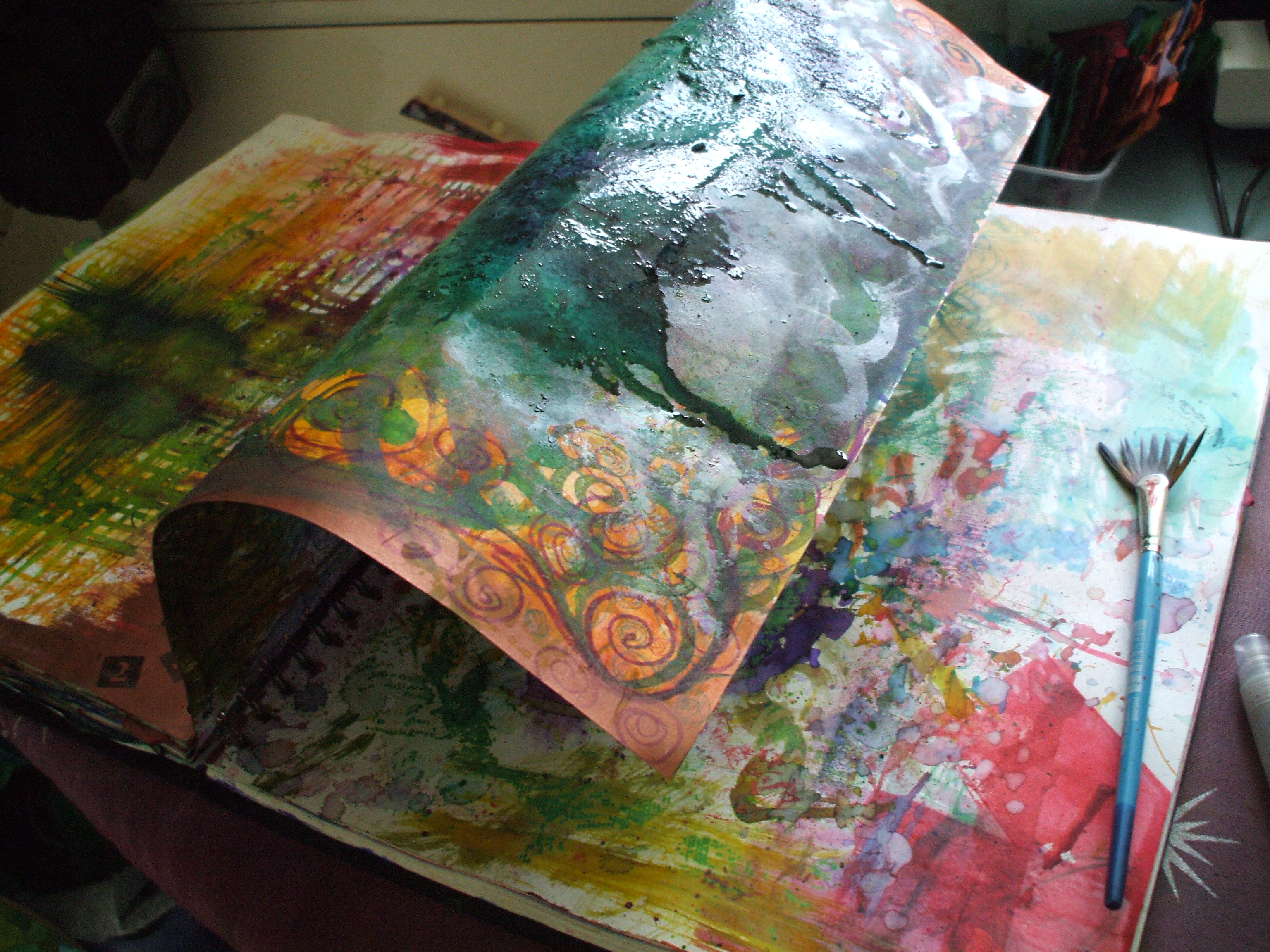
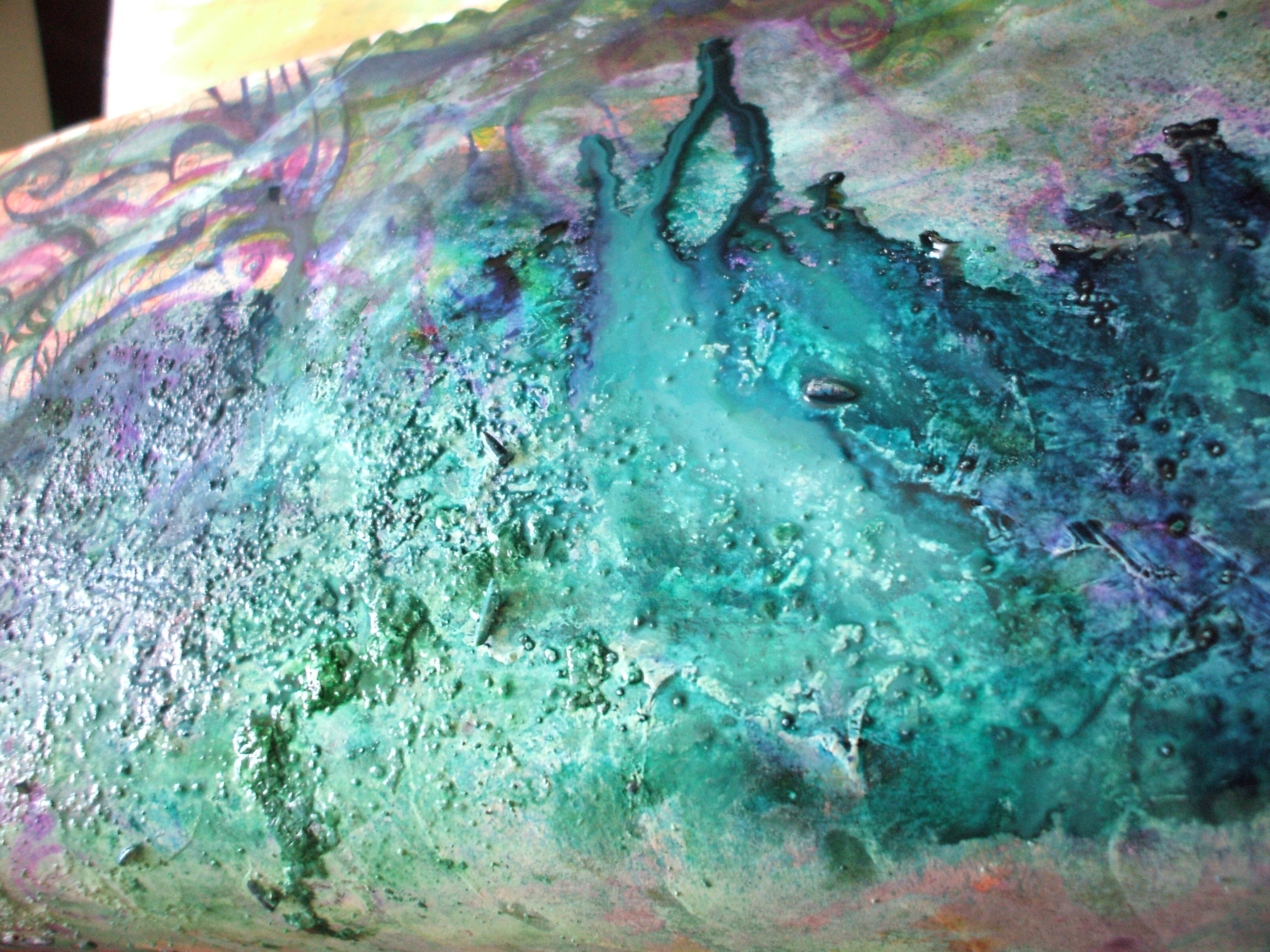
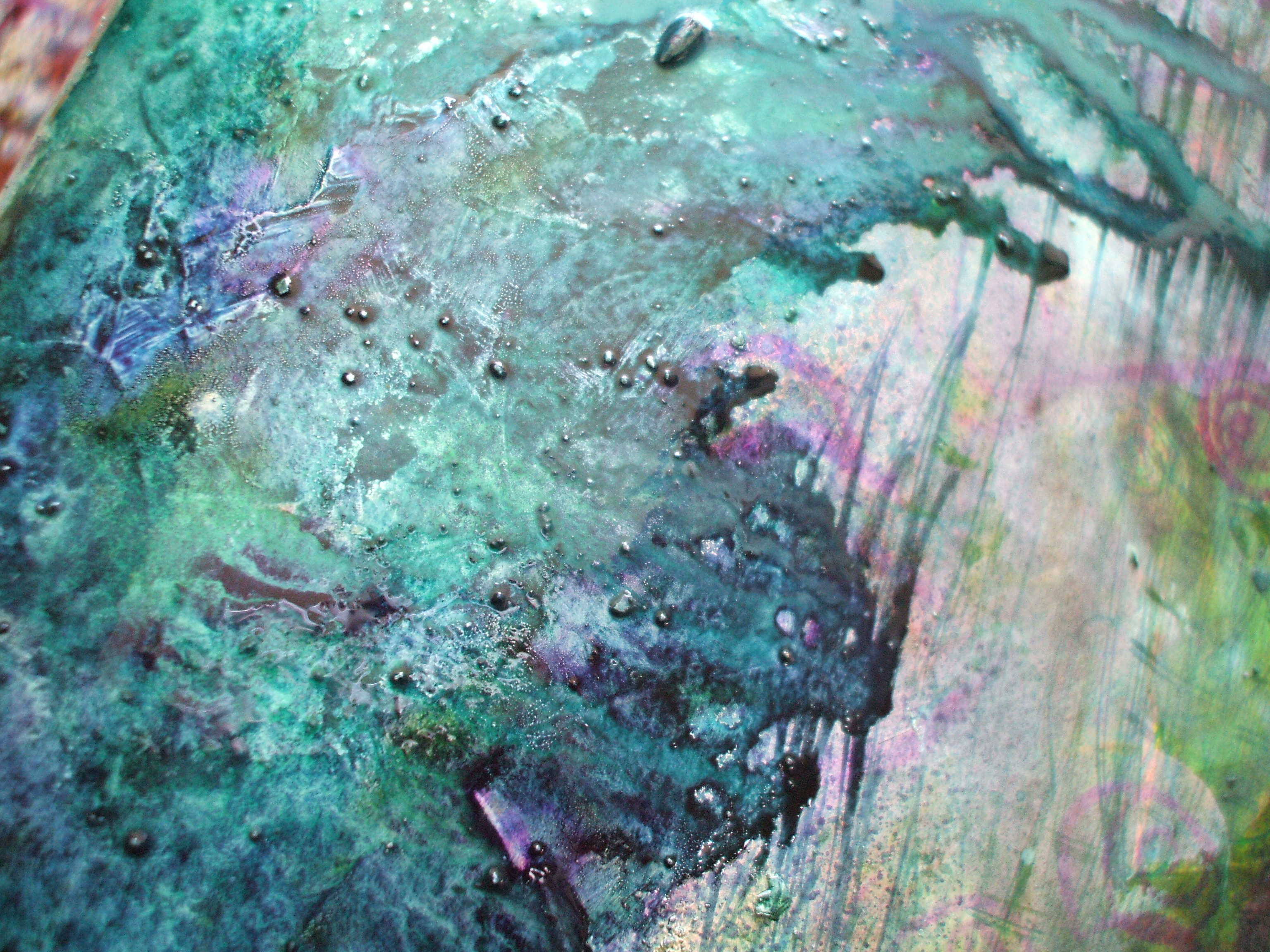
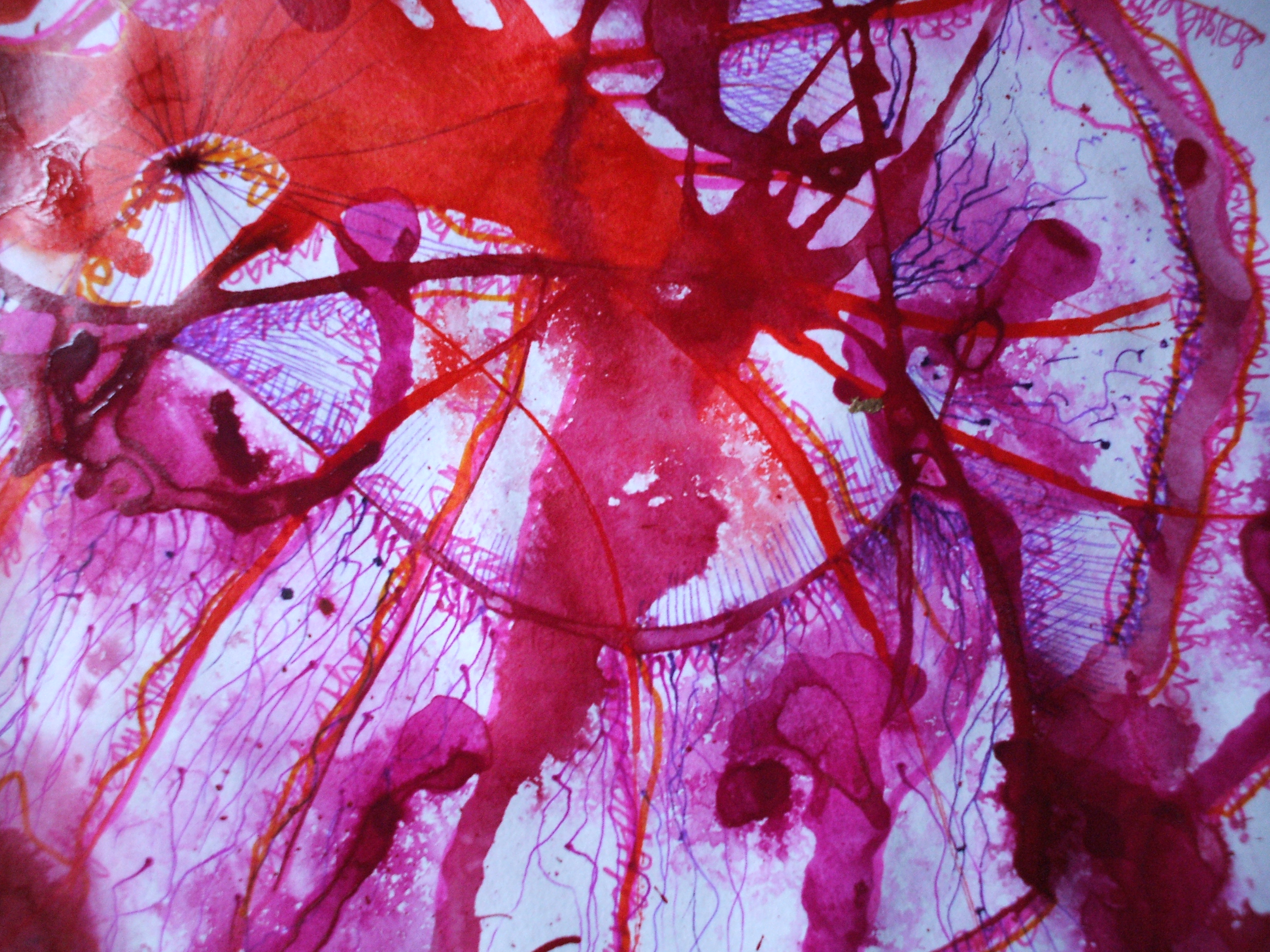
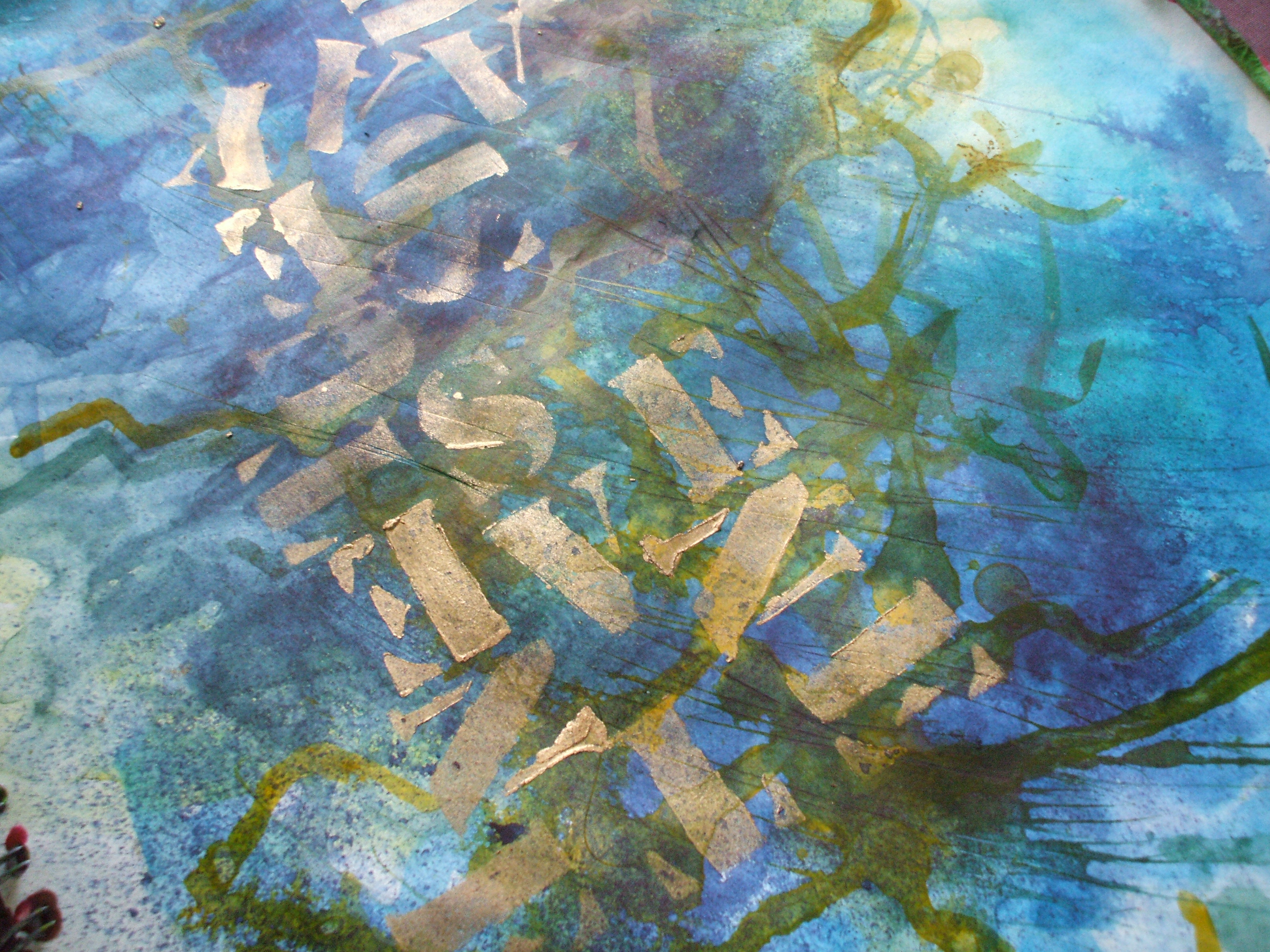
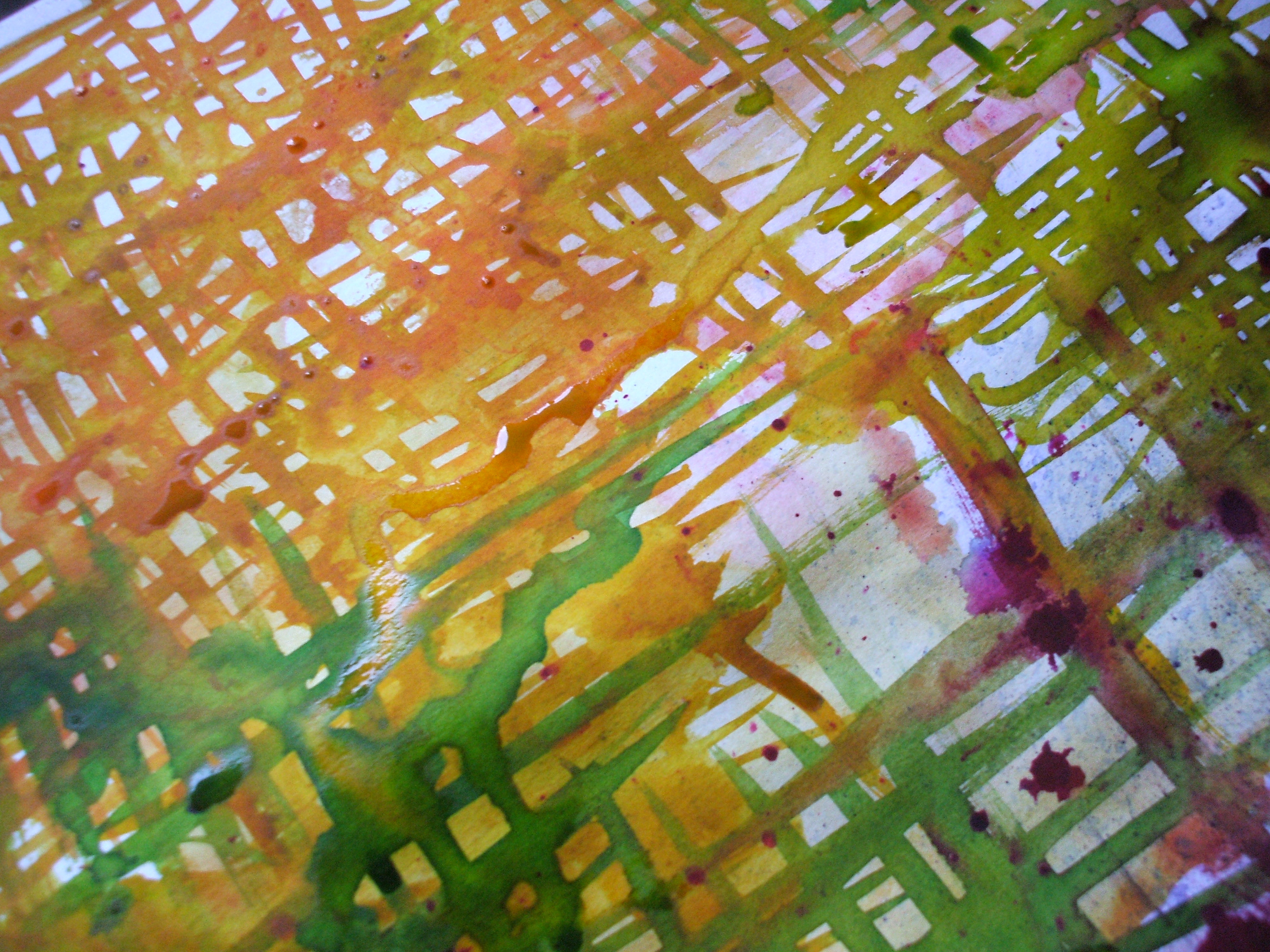
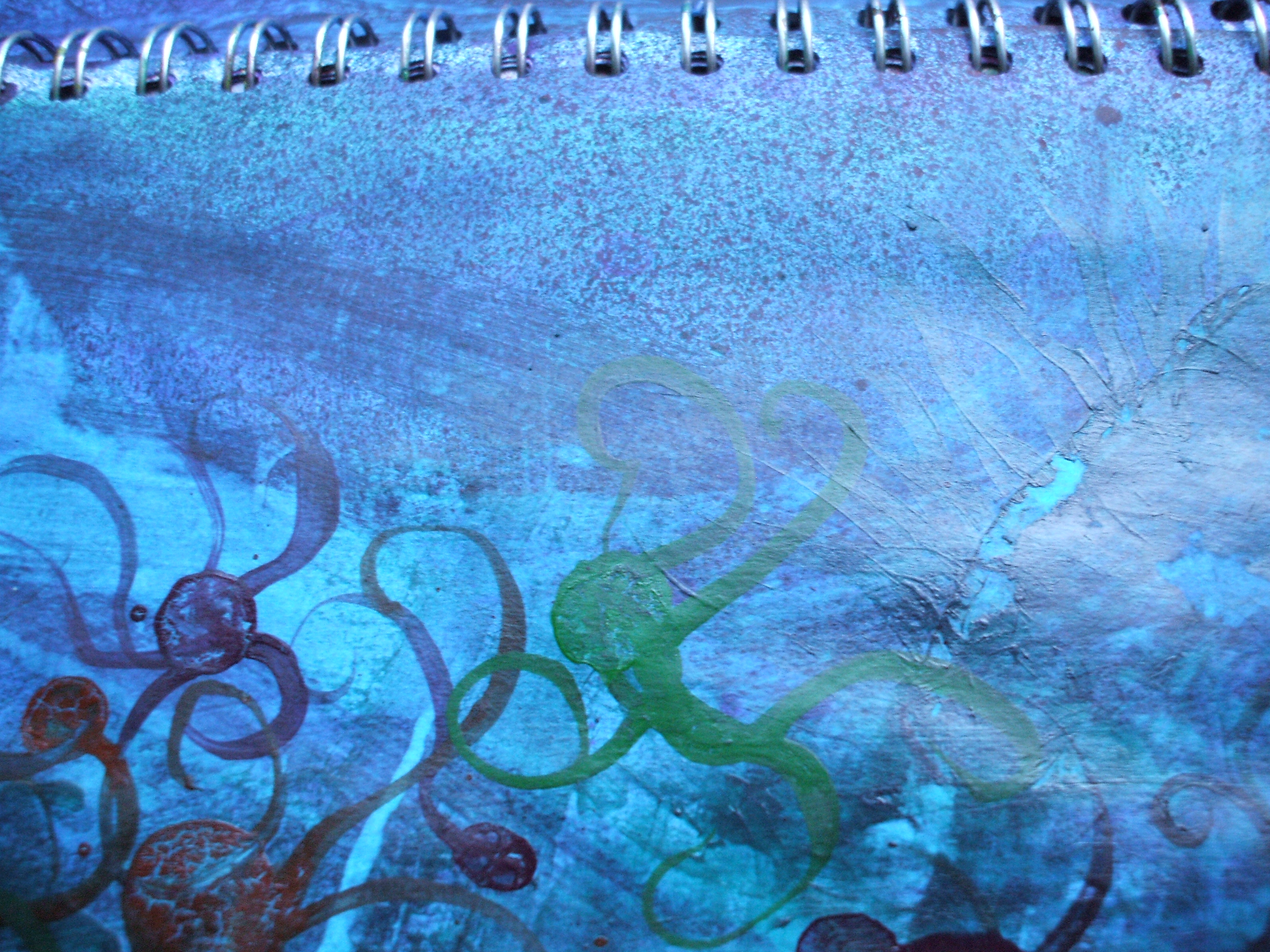
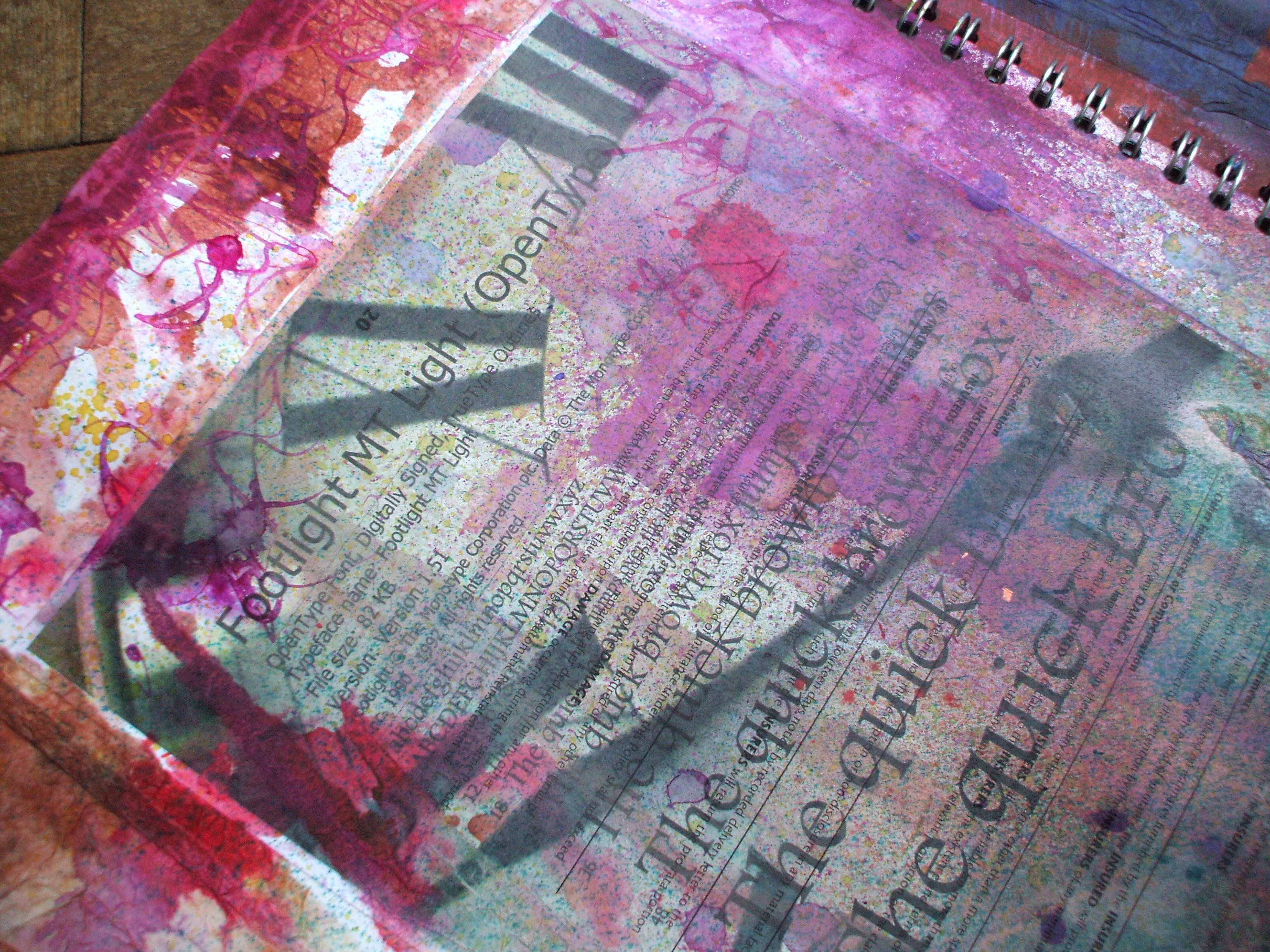
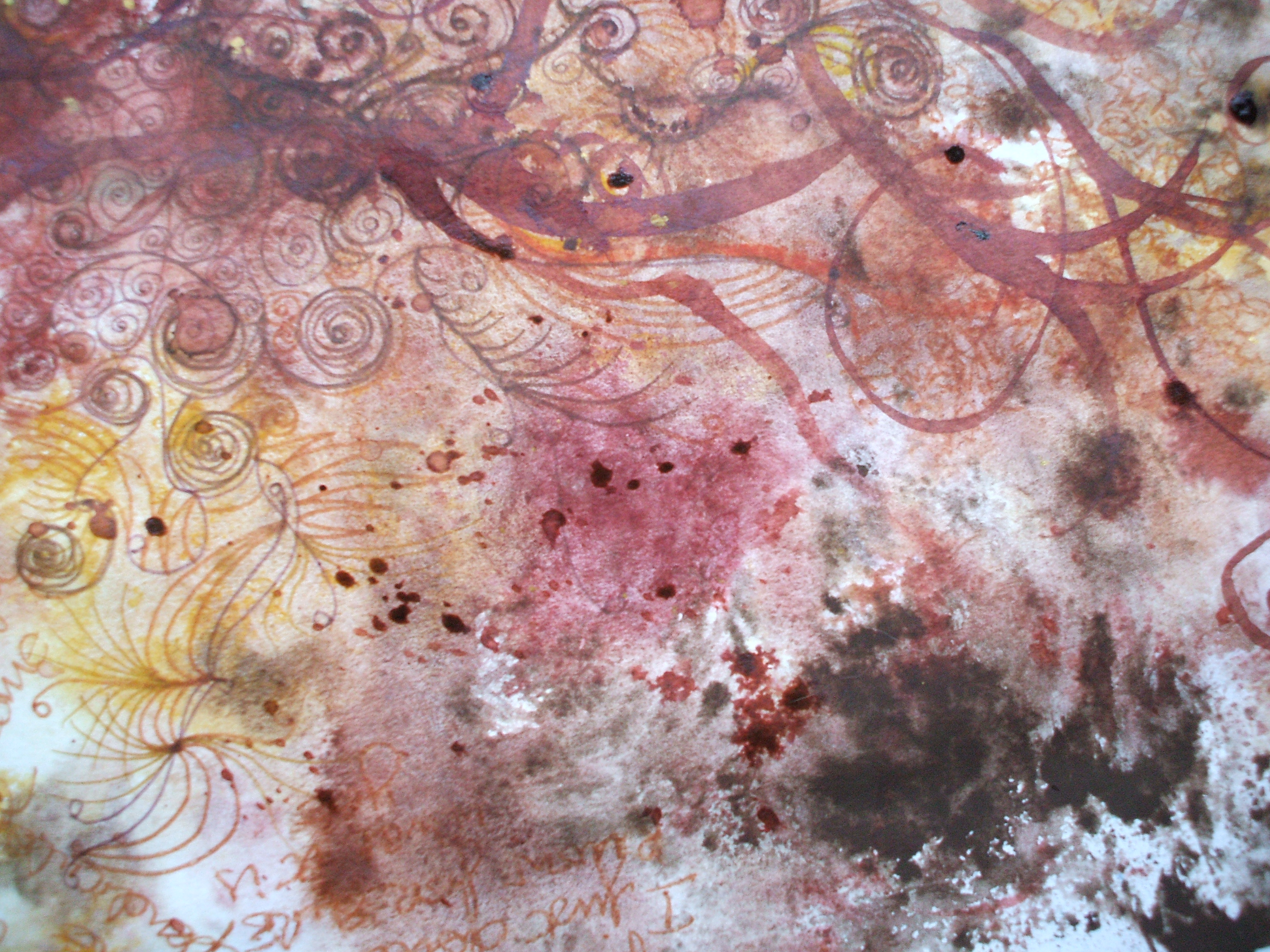
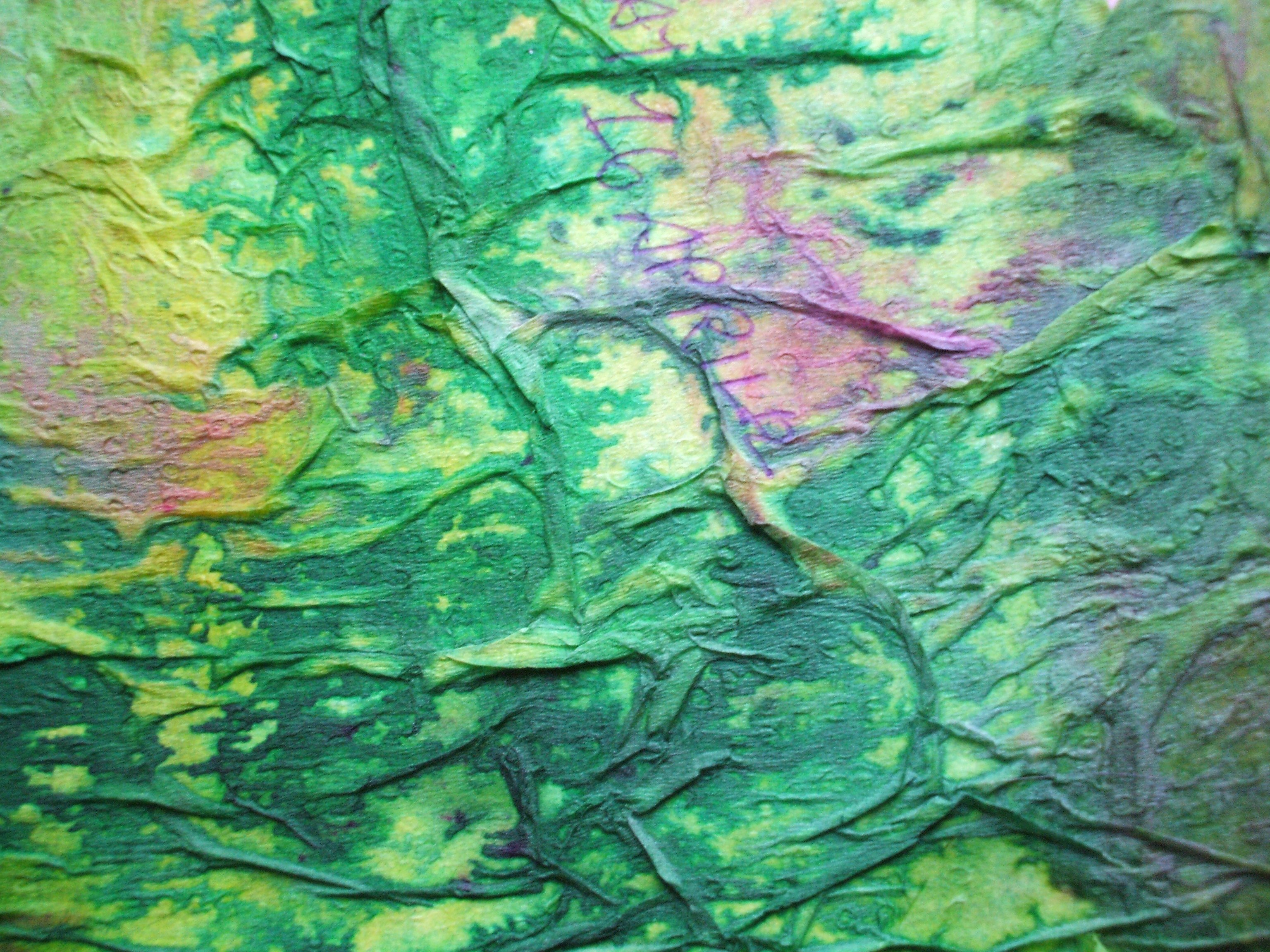
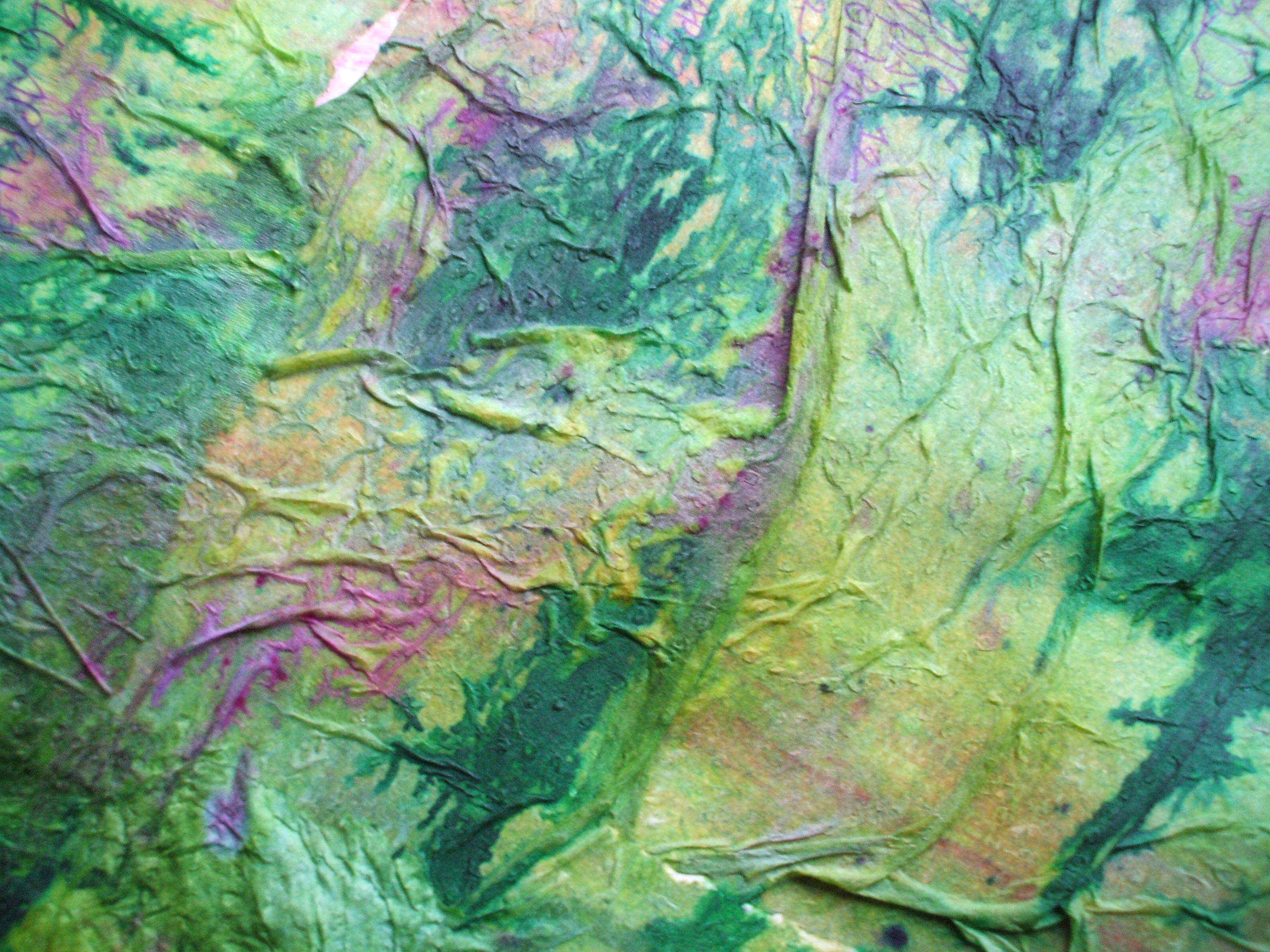
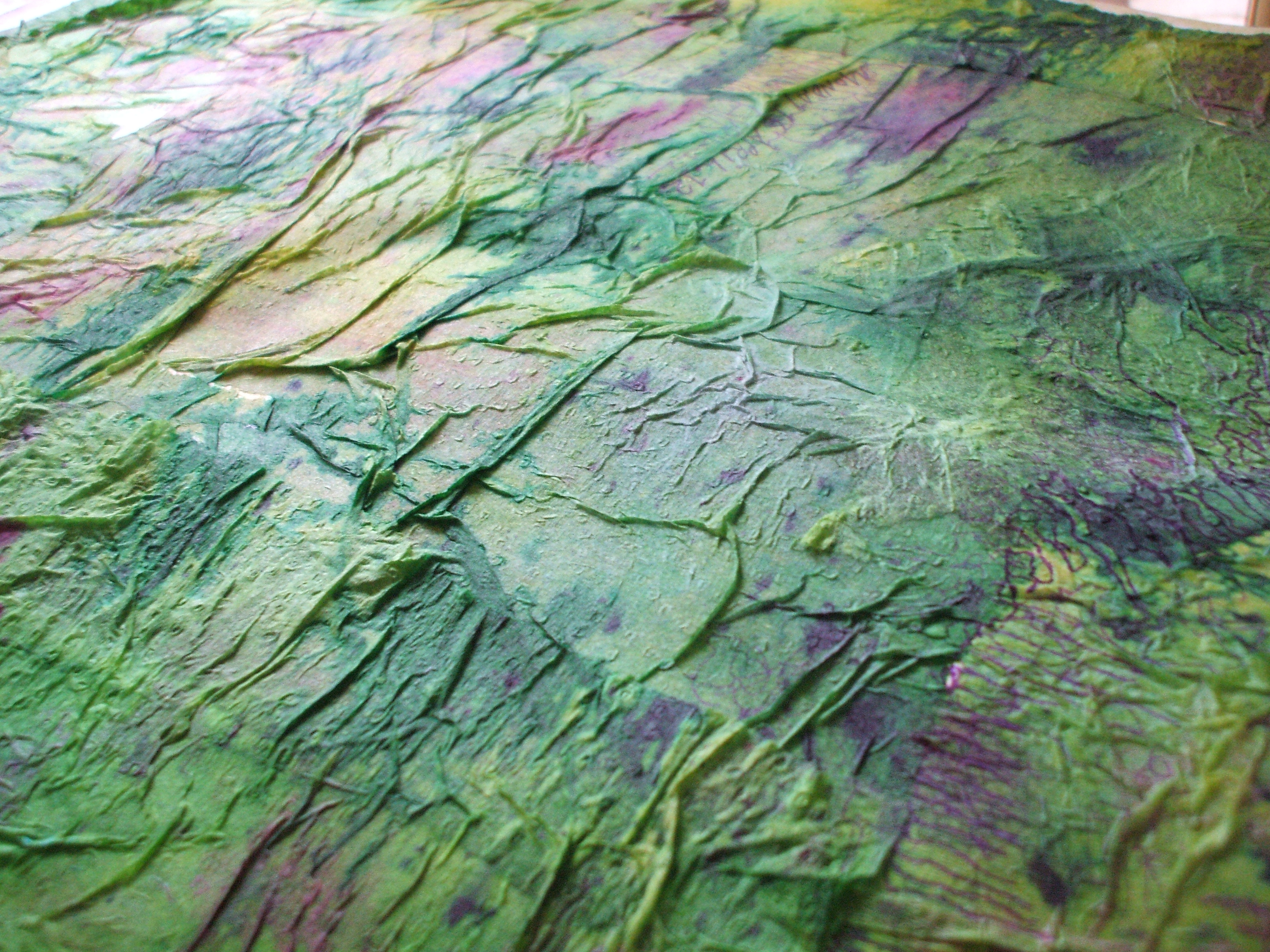
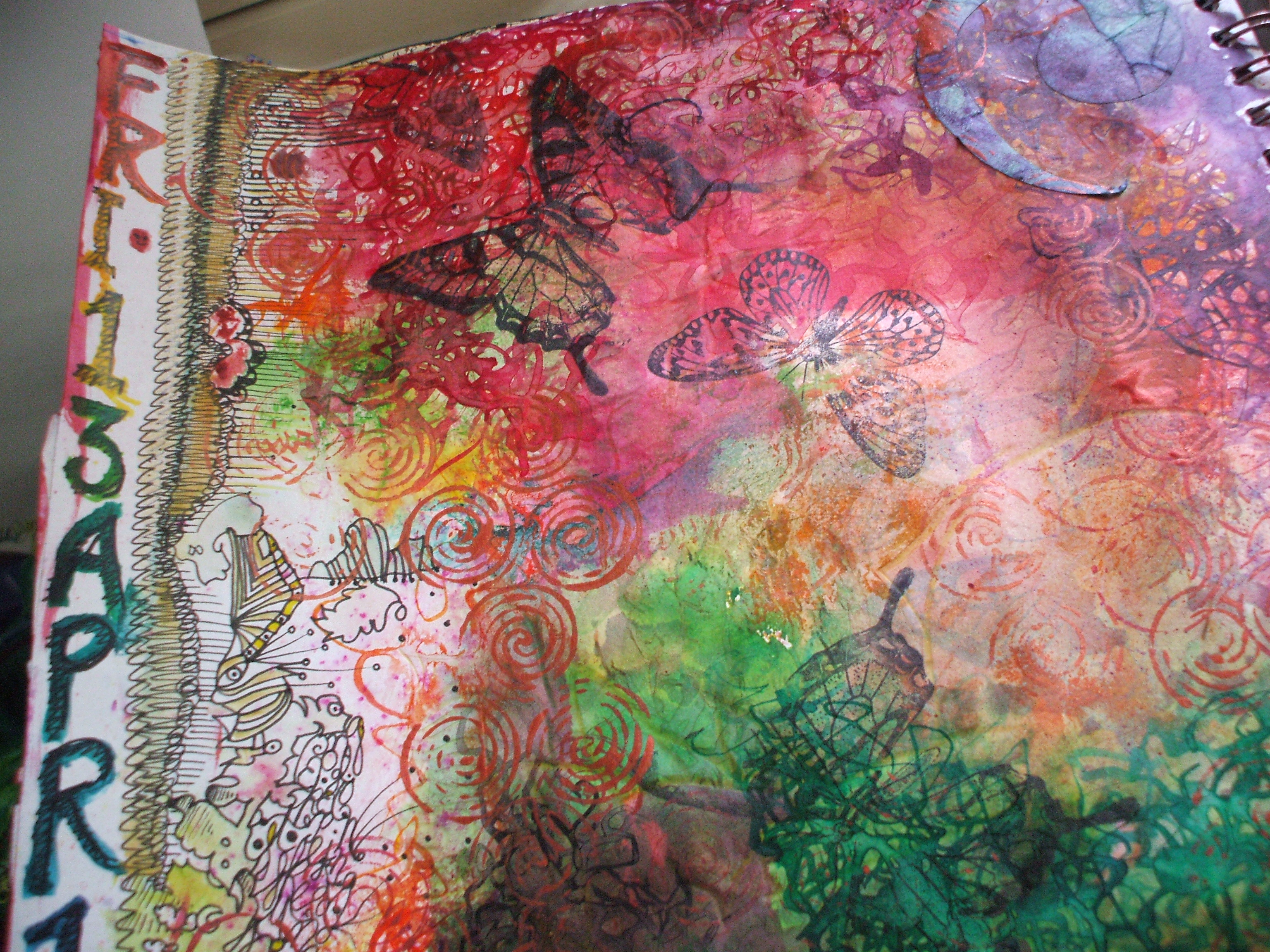
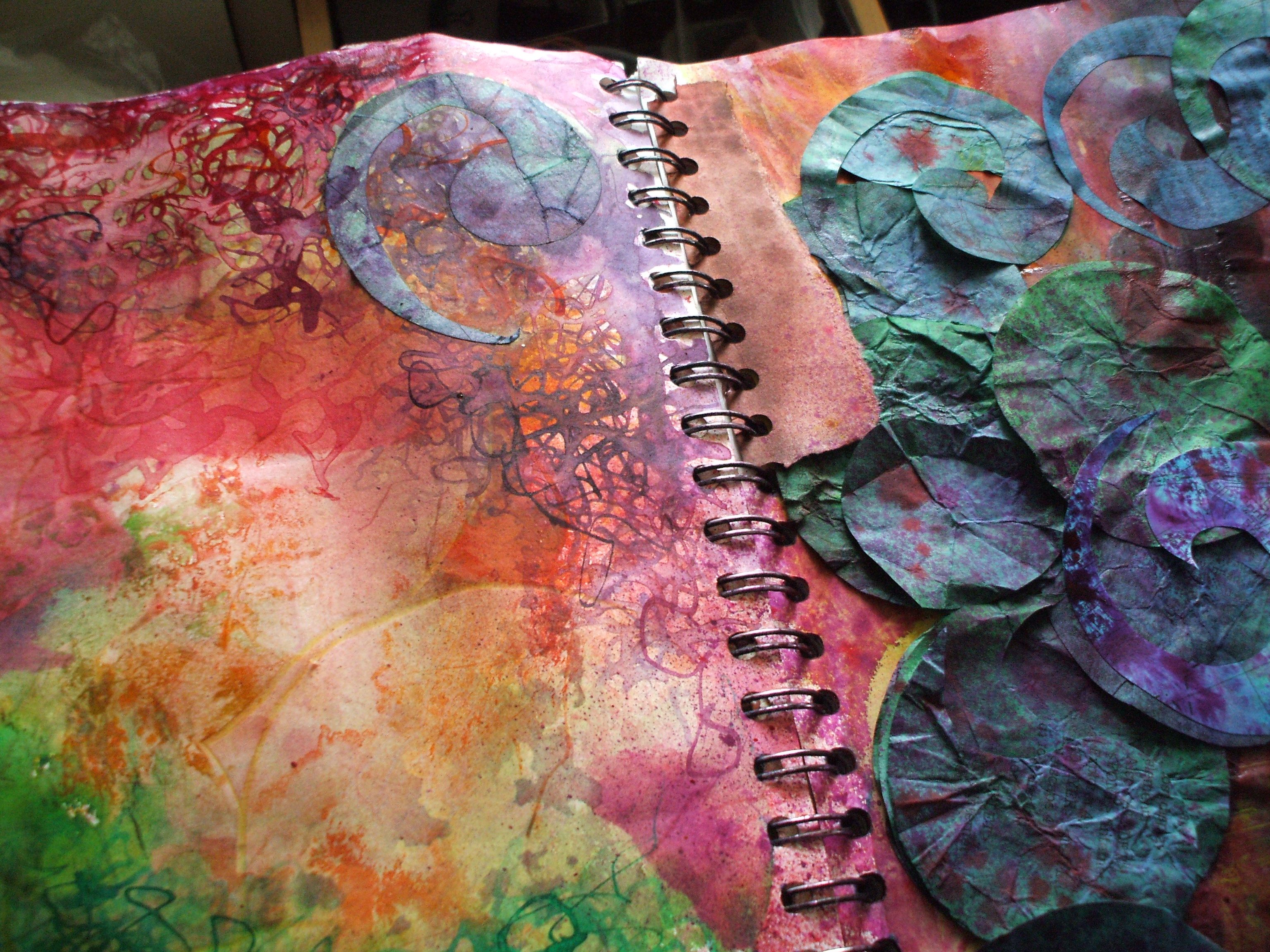
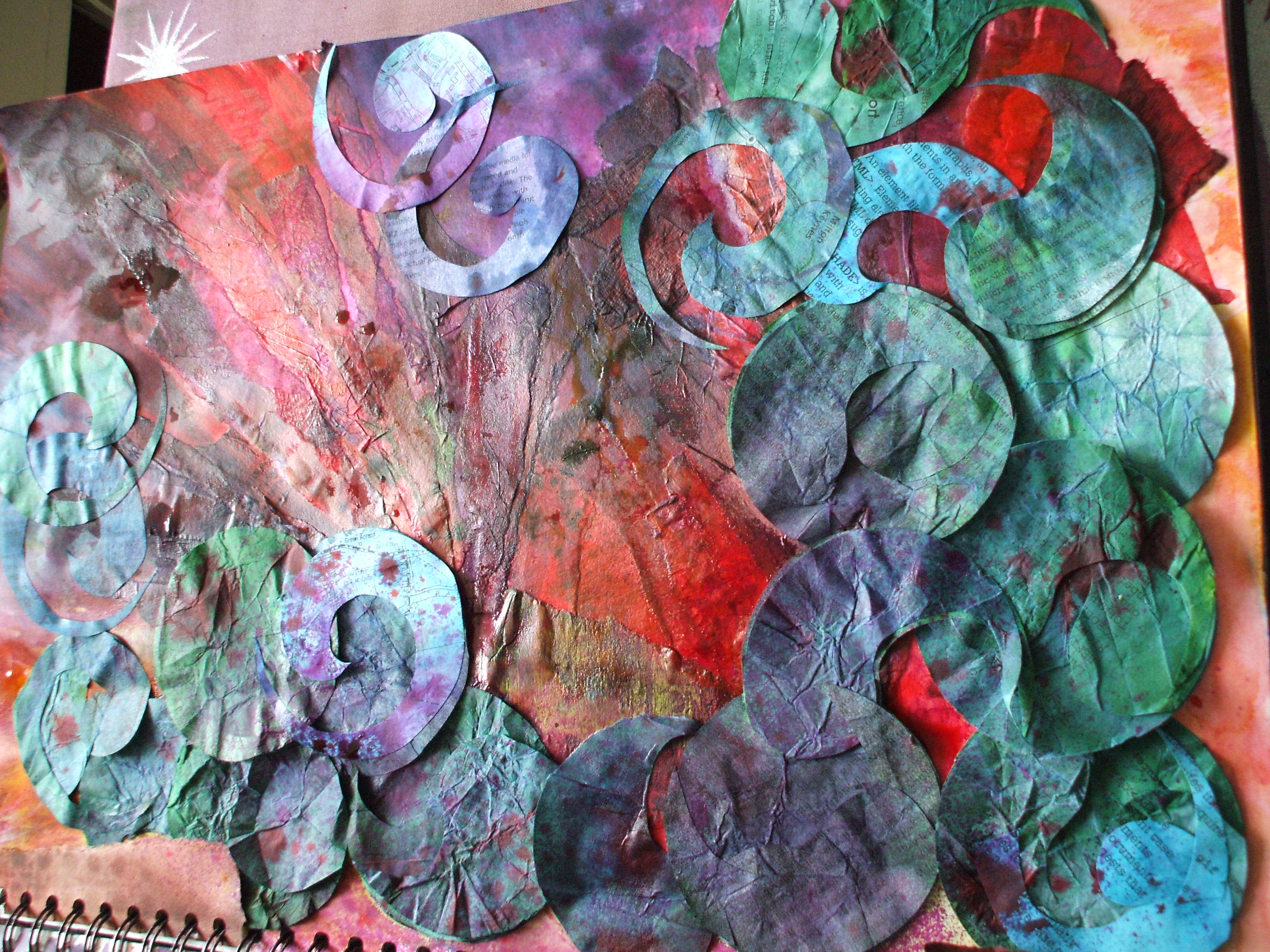
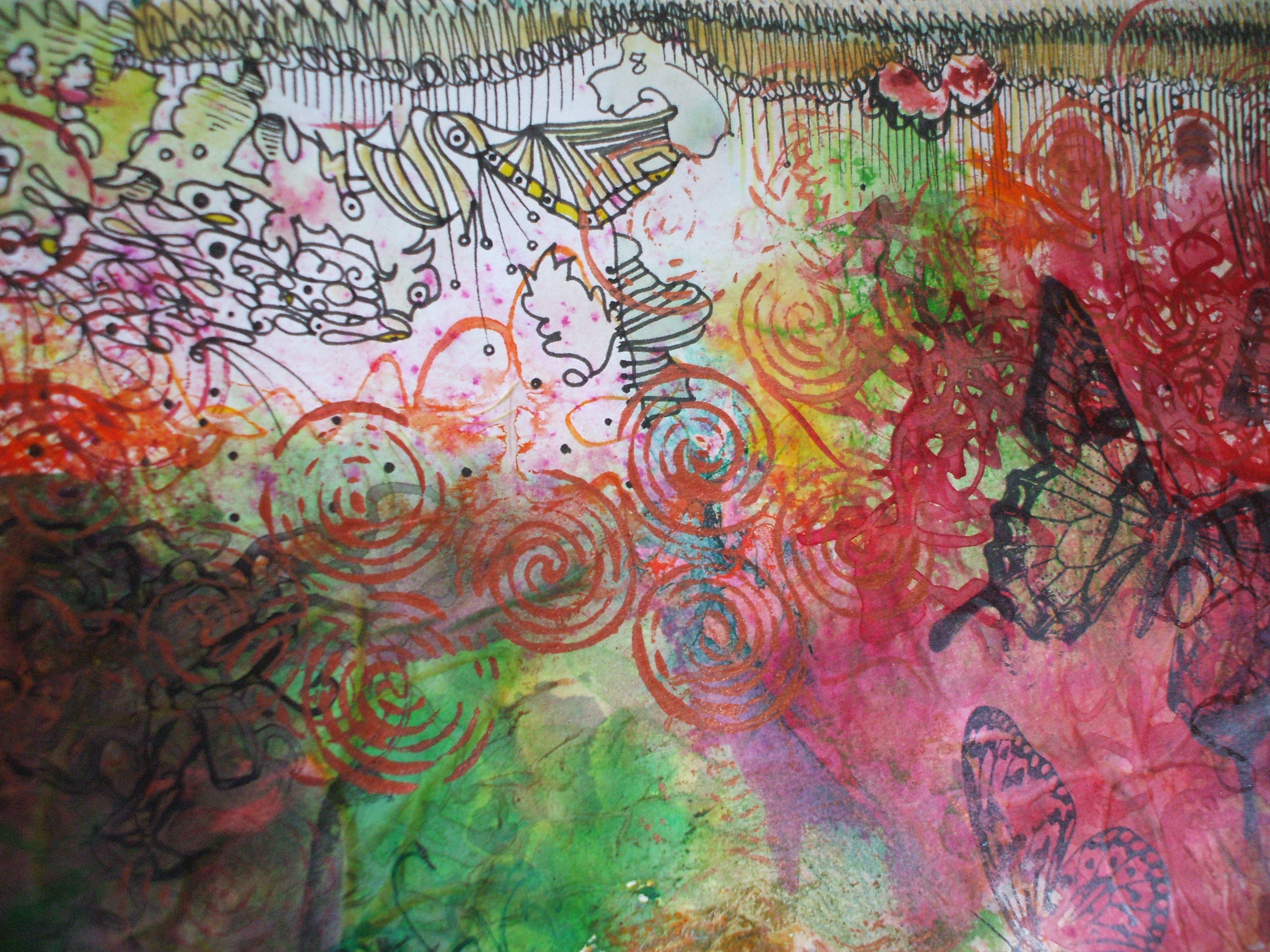
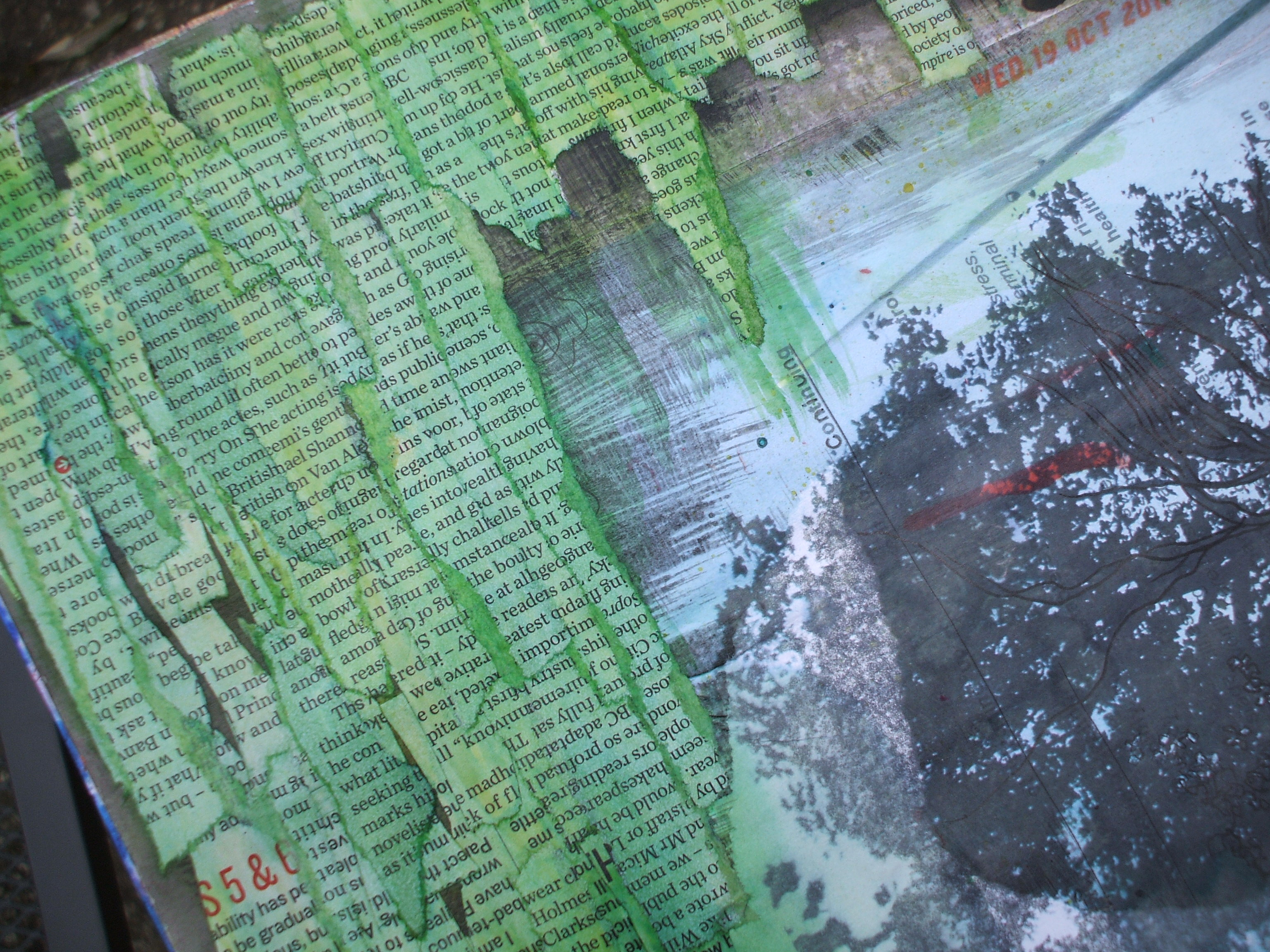
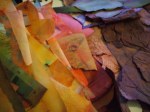
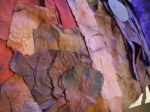
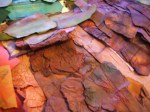
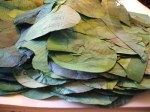
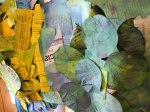
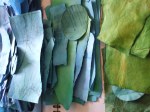
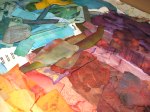
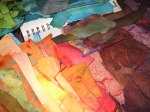
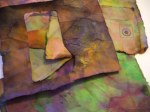
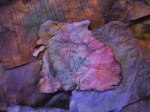
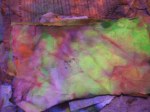
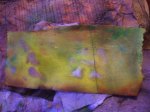
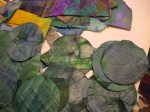
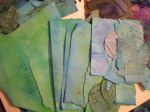
As I type to you the final drippings and runnings of this page a doing their thing, which give me the chance to show you some more bits of page.

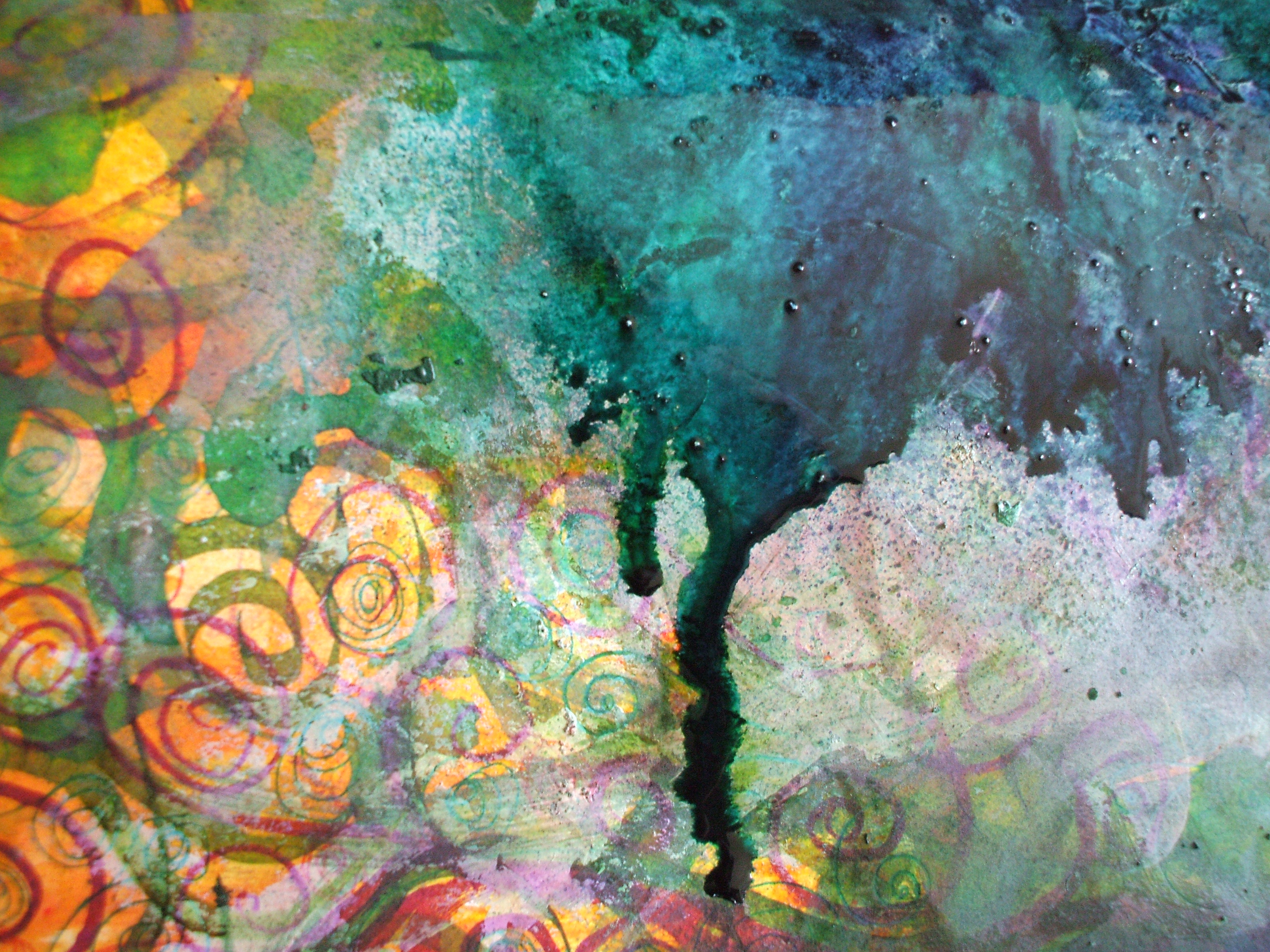
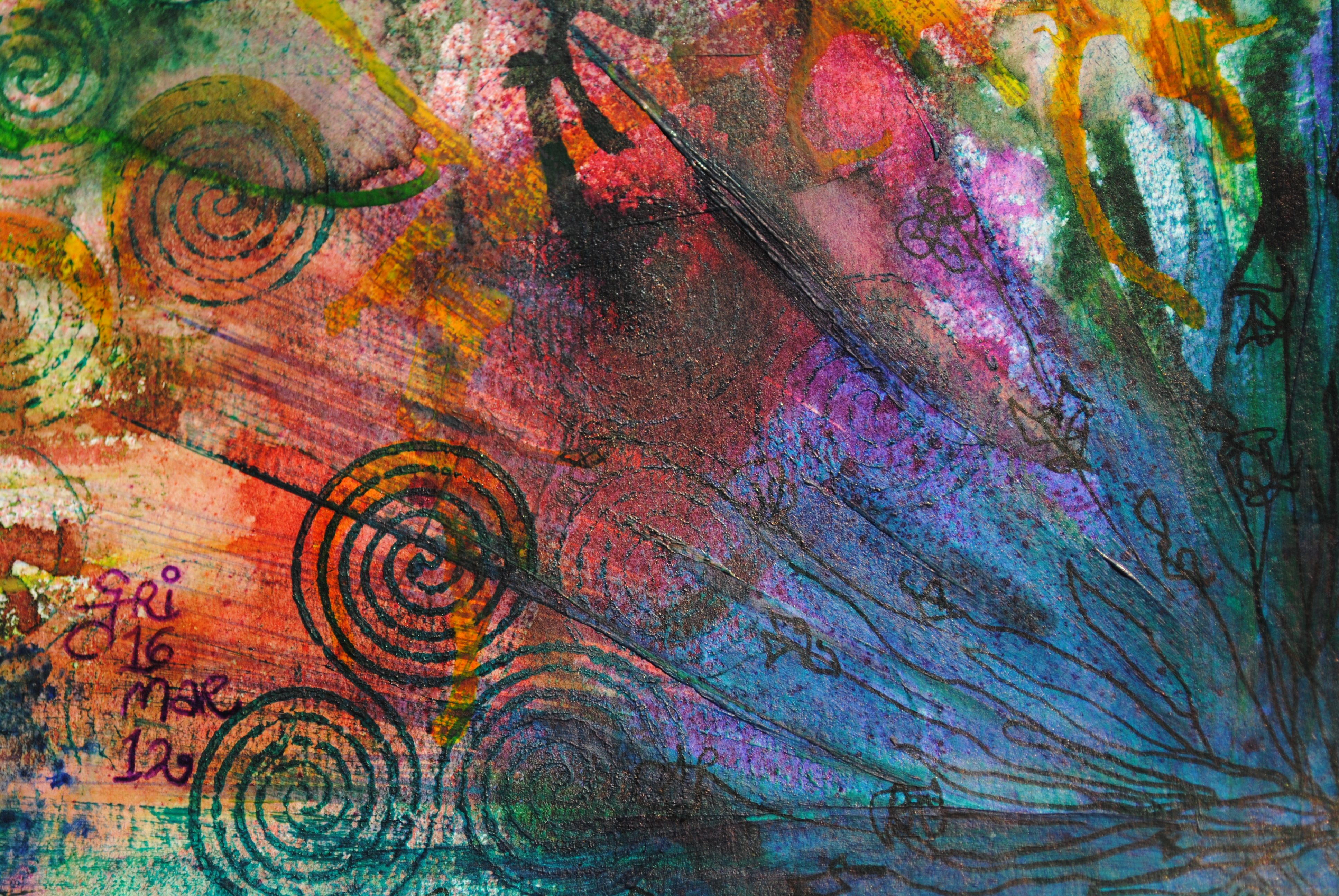
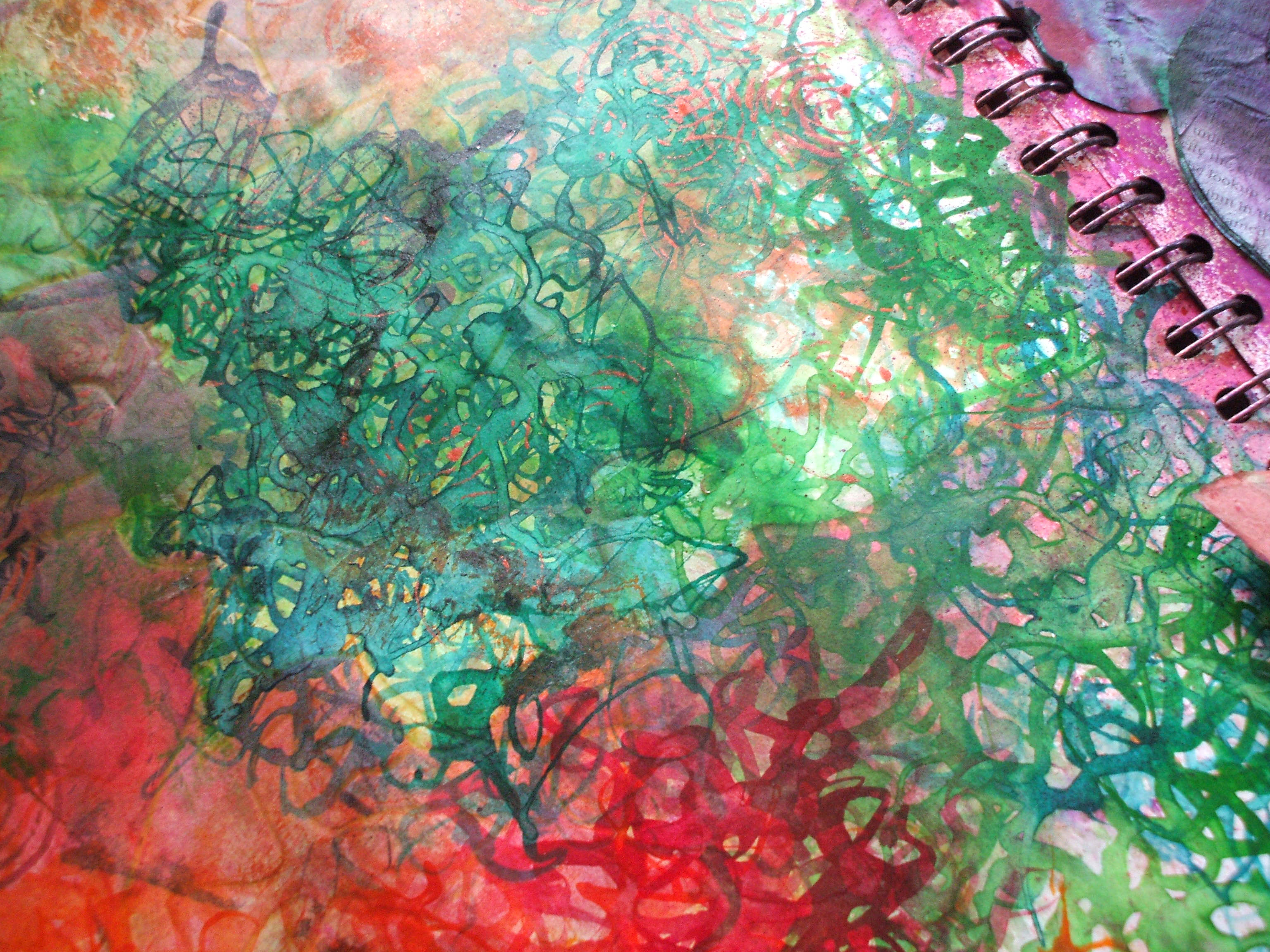
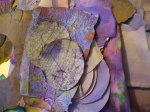
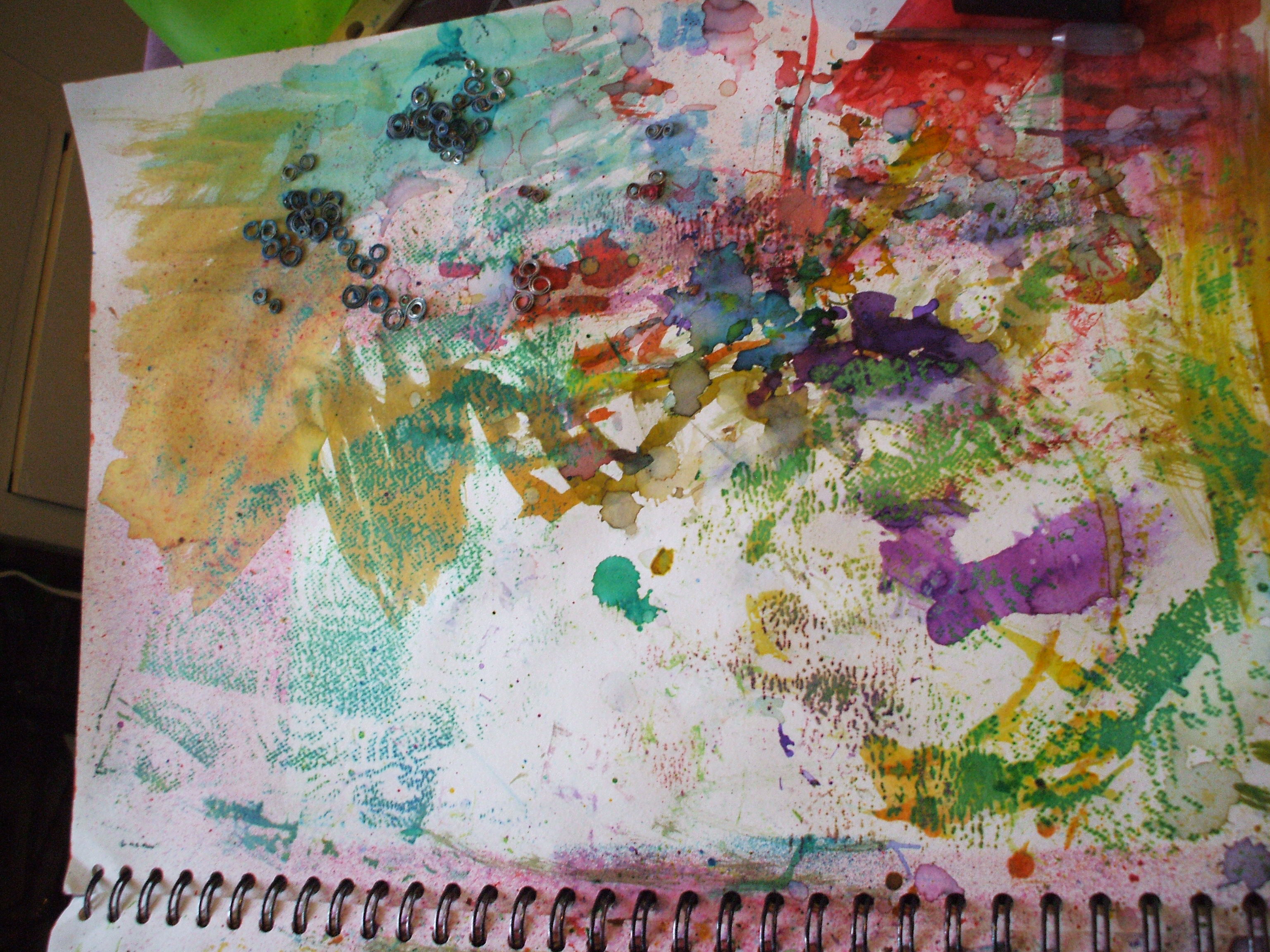
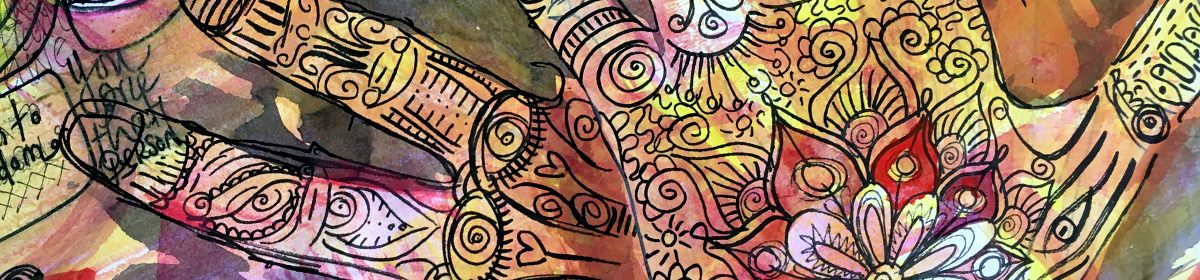
After scribbly ink and doodles I wanted to knock back some of the busy color and detail, which I did with a mix of acrylic and guache. Sliding and scraping with palette knife.

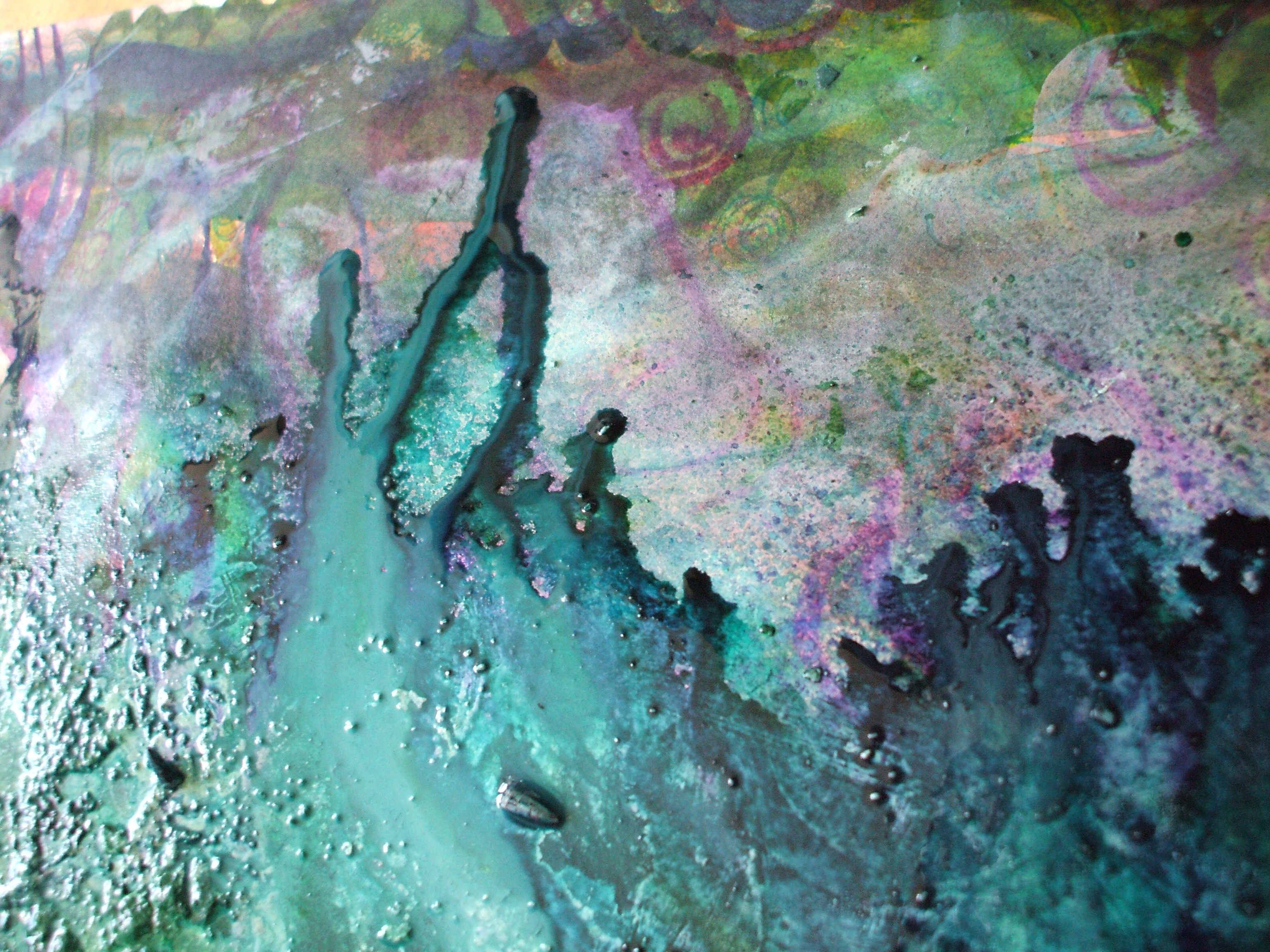
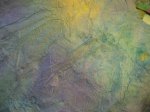
I wanted to liven up the texture, so used coarse pumice gel and – what’s to hand? – aha! leftover dyed rice! Then a swish of spray ink…

Only drying time will tell if the rice sticks, but even if it doesn’t, it’ll leave some nice rice-scars behind. Happy either way!

I love the way the wet media allow the pigments to travel, gather, collect together in bands. In these colors it reminds me a little of malachite

trekking round this learning curve

Embarking on a project like a page a day, without an aim in sight, more a stretch of the journey traveled in a new fashion, has to be done without expectations.

I’ve doodled and made art since before I can remember.  Habitually, obsessively, because I love the process, and because (probably like all artists) I have to.

This is a different approach: One book that daily documents my trials and tribulations of the moment in color and shape, tone and imagination. Day in, day out. And then spilling out the results out into the interweb.

Having pondered if the pages might soon look samey, I’m starting to realise the range and variety of imagery that can be created.

By observing small slices of each page on screen, perspective changes. Fresh ideas emerge.

The inspiration from something touched upon days prior can be reignited afresh when a blank page beckons.

And an unexpected bonus is to be blessed by the delightful and encouraging words from folks who join along the way, Big thank you! 😀

the what and the why of ‘a page a day’

When I began this project (a month ago today) I had no idea how long I’d stick with it. Or how easy/difficult, much fun/much of a slog, it would become.
Or for what reason I wanted to do it.

But I did want to.

So I began.

A Page A Day, the project.

Ingredients:

  • New A3 sketchbook
  • All my paints, pens, inks, dyes, brushes, forks and sticks… if it makes a mark, it can join the game
  • This blog. To record and evaluate, to review and assess, keep track in a different medium of unfolding development. Regularly (I thought maybe daily, yeh…)
  • A spare 1/2 hour or so each day to fill that day’s page

That’s it, no rules.

Just one page at a time. One day at a time
(With maybe a little to-ing and fro-ing in between, but with the majority of today’s page being created today.)
Day 1, Page 1

Day 1: 16 March 2012. A Friday.
Home from work with the whole evening set aside to arty things, with the possibility to spill out over the weekend.

And wow did it spill! Everyday is painted, collaged, drawn on, doodled on, written on; dripped, splished and splatted on.

(I’ve posted previous pages if you’re interested here, here, here. And here n here!)

There are days that I’m more pleased with the result than others, but isn’t that a metaphor! If I find something really wanting on a page I’ll go back and add it. Using my sketchbook as a work surface (no drips of color go to waste in my world!) means some ‘new’ pages will begin with splishes and spills of color. S’okay.

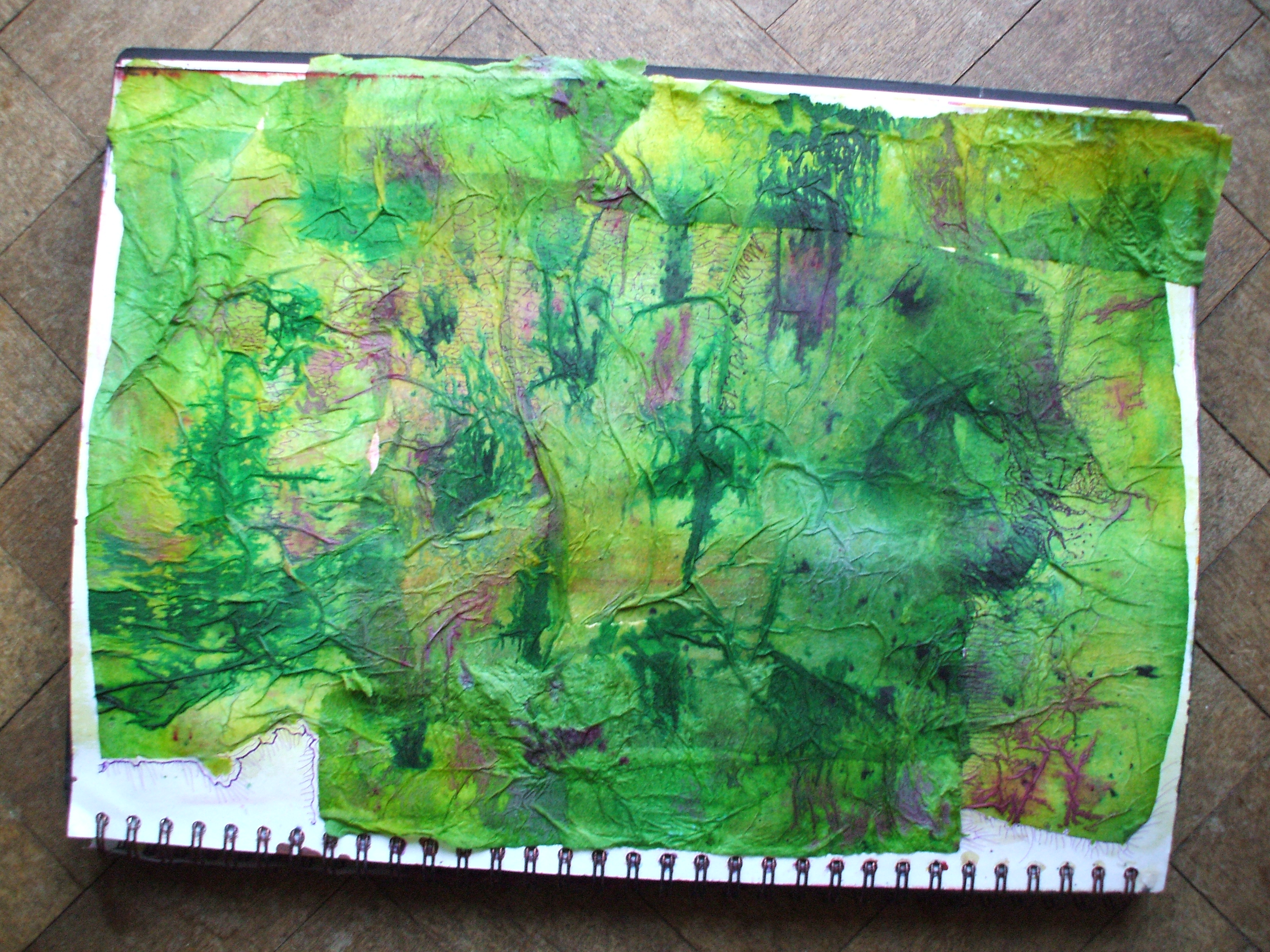
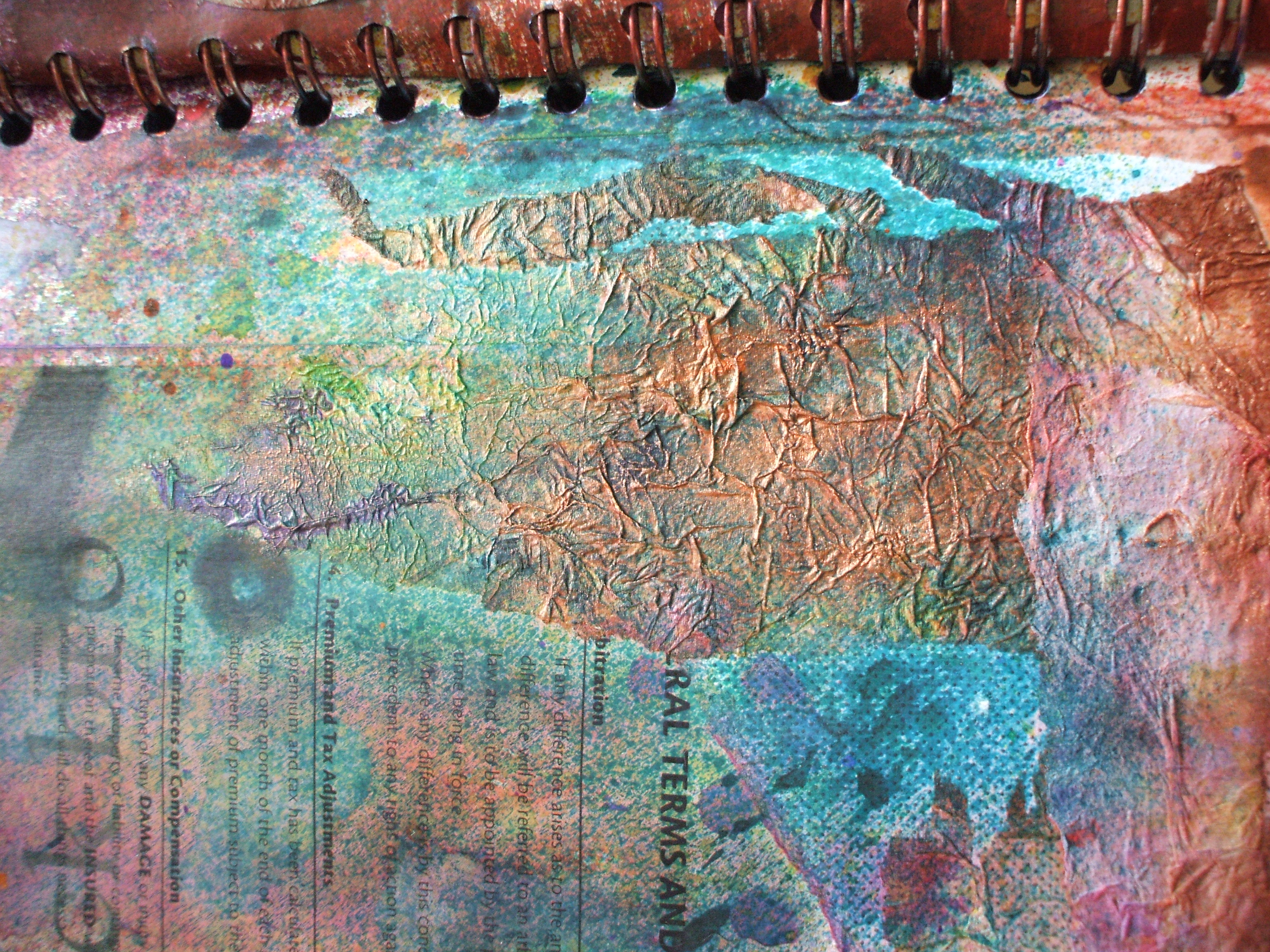
Today ‘s page looks a lot like a page with inky paper towels stuck to it.


That’s cool. Cos I’m not so interested in what the page as a whole looks like.


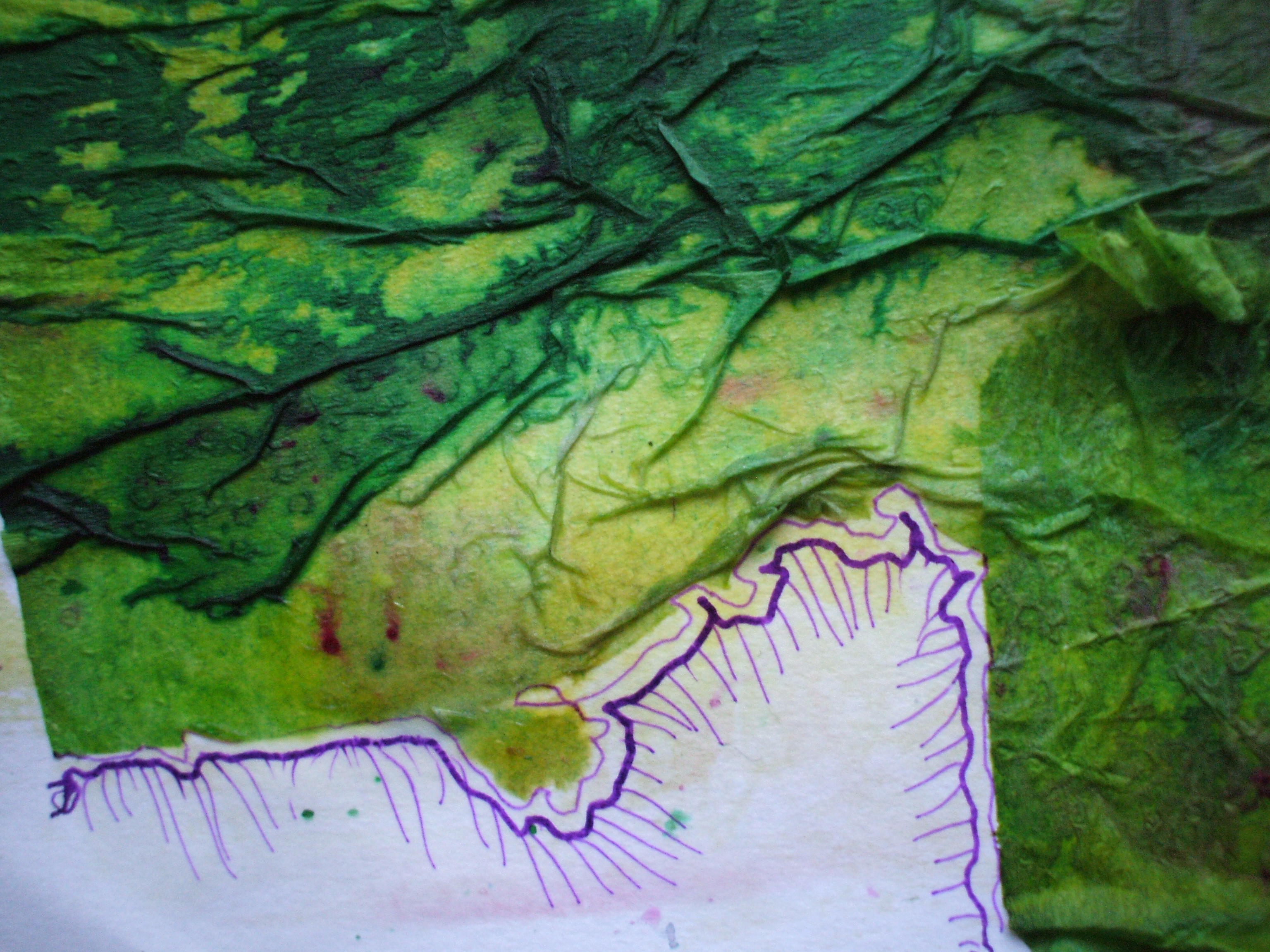
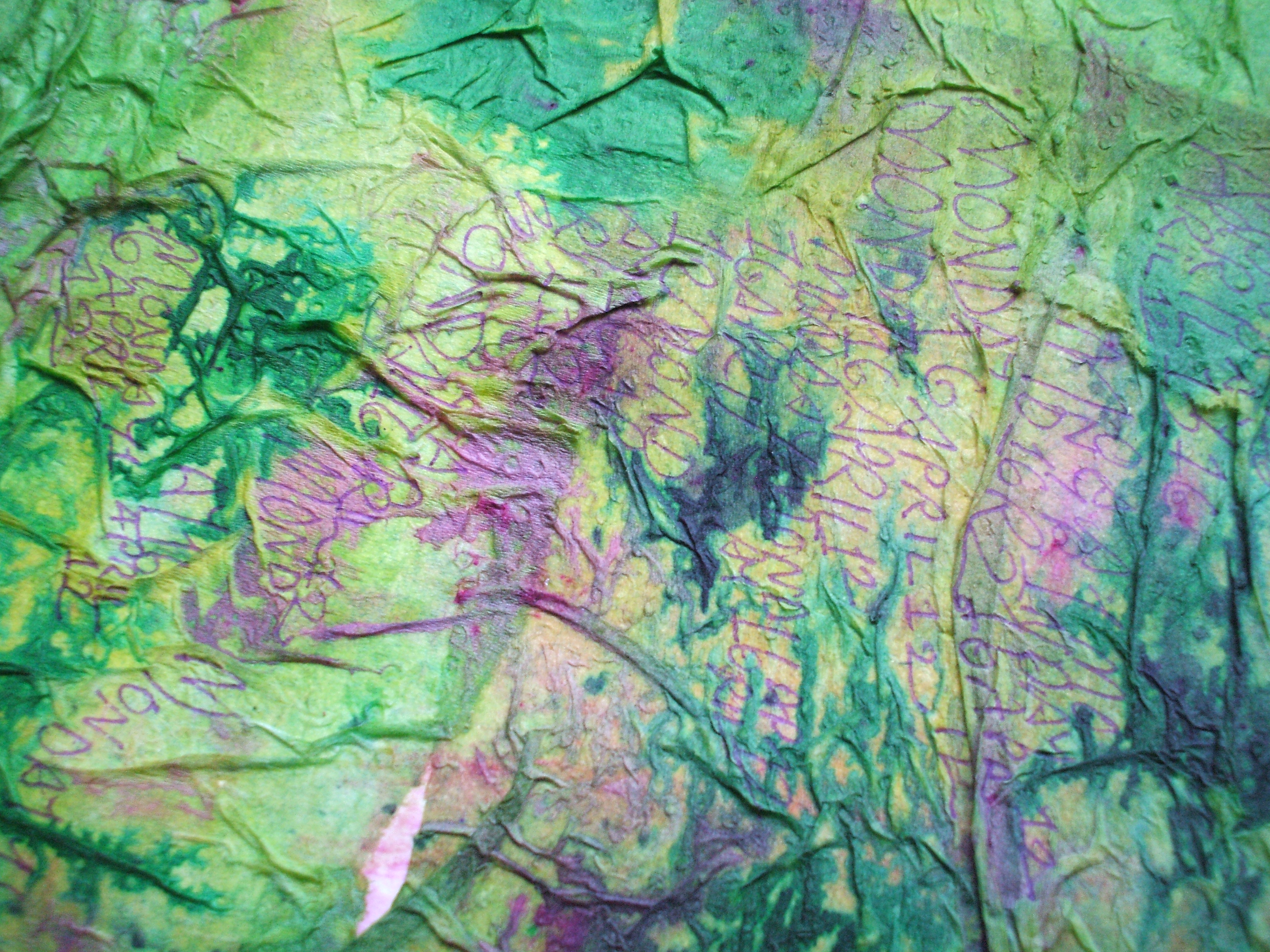
These are the bits I like.

The miniature landscapes,

The inter-mingling of inks and dyes,

The light and the shade cast by wrinkles and dimples.

adventures in color: ingredients

In response to the feed back on my paper dying project, thought I’d share some inspiration and some of my fave ingredients if you’re interested in doing something similar.

Firstly I must introduce you to an artist I find enormously inspirational, Ruth Issett.

Ruth has authored several books of mouth-wateringly delicious adventure in color and frequently runs courses and workshops.

Take a peak at her Glorious Papers: Techniques for Applying Colour to Paper – this is one of my fave books to set ideas flowing.

Dyes

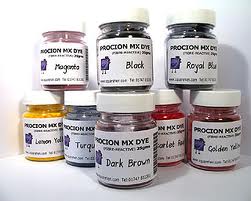
For real vibrant colors, both for fabric and paper, I use Procion dyes. These are available at some art/craft stores, or the trusty shop that sells most everything.
The dye powder needs to mixed with water, and the colors blend beautifully. If you’re using them for paper there’s no need to use any fixative, just treat them like an ink.

Inks

I also love to use Brusho inks. Again these come in powder form to be mixed with water.
If you sprinkle the dry powder (a little goes a long way) on damp paper you can get some fabulous starburst effects and color separation from the individual hues of pigments . Try it and find out!


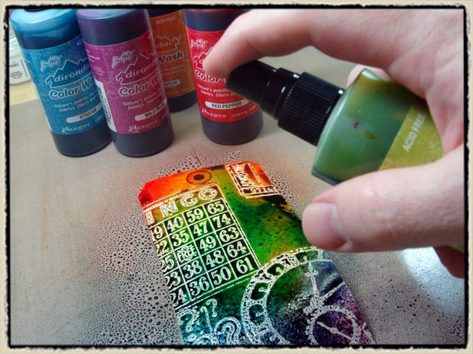
Then there’s the Ranger Adirondack Color Wash sprays.
These can be used on fabrics too if heat set with an iron.
Ready mixed, these come in spray bottles.


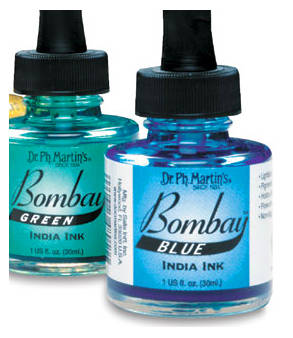
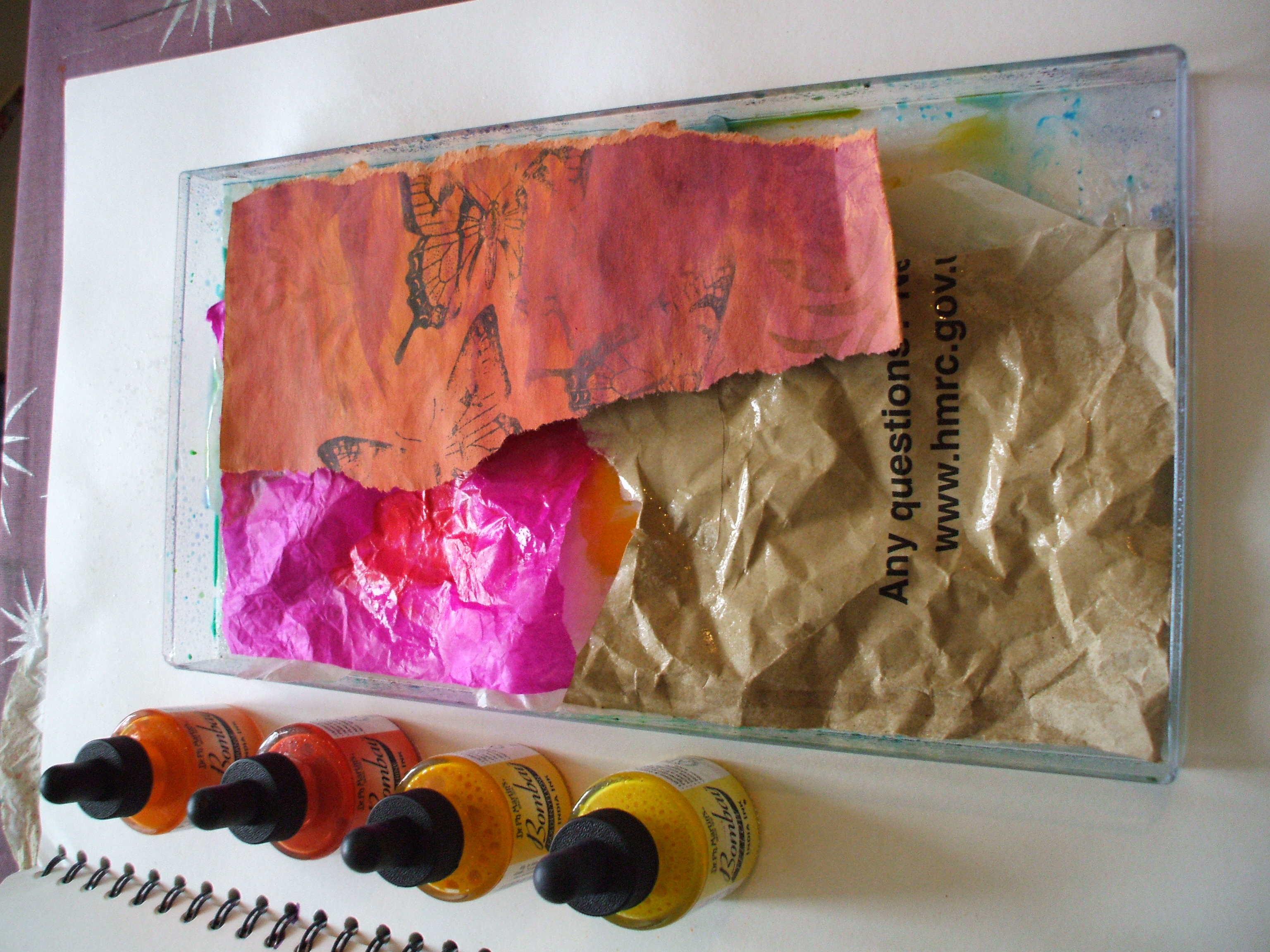
Dr P H Martin’s Bombay ink.

Having picked up a bottle of this at my local art shop, in a fit of extravagance I got myself both full sets of 12 colors and have to say it was a great investment.

They come in dropper bottles, perfect for dripping onto paper!

The colors are vibrant and strong, so again you don’t need to use loads, and a bottle lasts a long time.

Paints

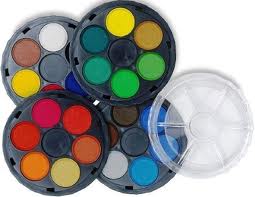
Koh-I-Noor paints are fab for several reasons.

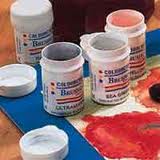
The colors are rich and intense dye-based paints which come as 4 stackable palettes. The middle bit of each palette, along with the lid, can be used for water or mixing shades, and they are perfect if you want to take your colors out and about with you.

NB Koh-I-Noor also make stackable palette sets like this with regular watercolor – this is the one in the illustration. The ones I use are the intense dark dye based ones. Check out the comparison of colors here. Read more about playing with these here


I hope you’ve found this interesting/useful and it may have sparked some ideas for you. Til next time, happy creating, folks! 😀

lost in color (continued)

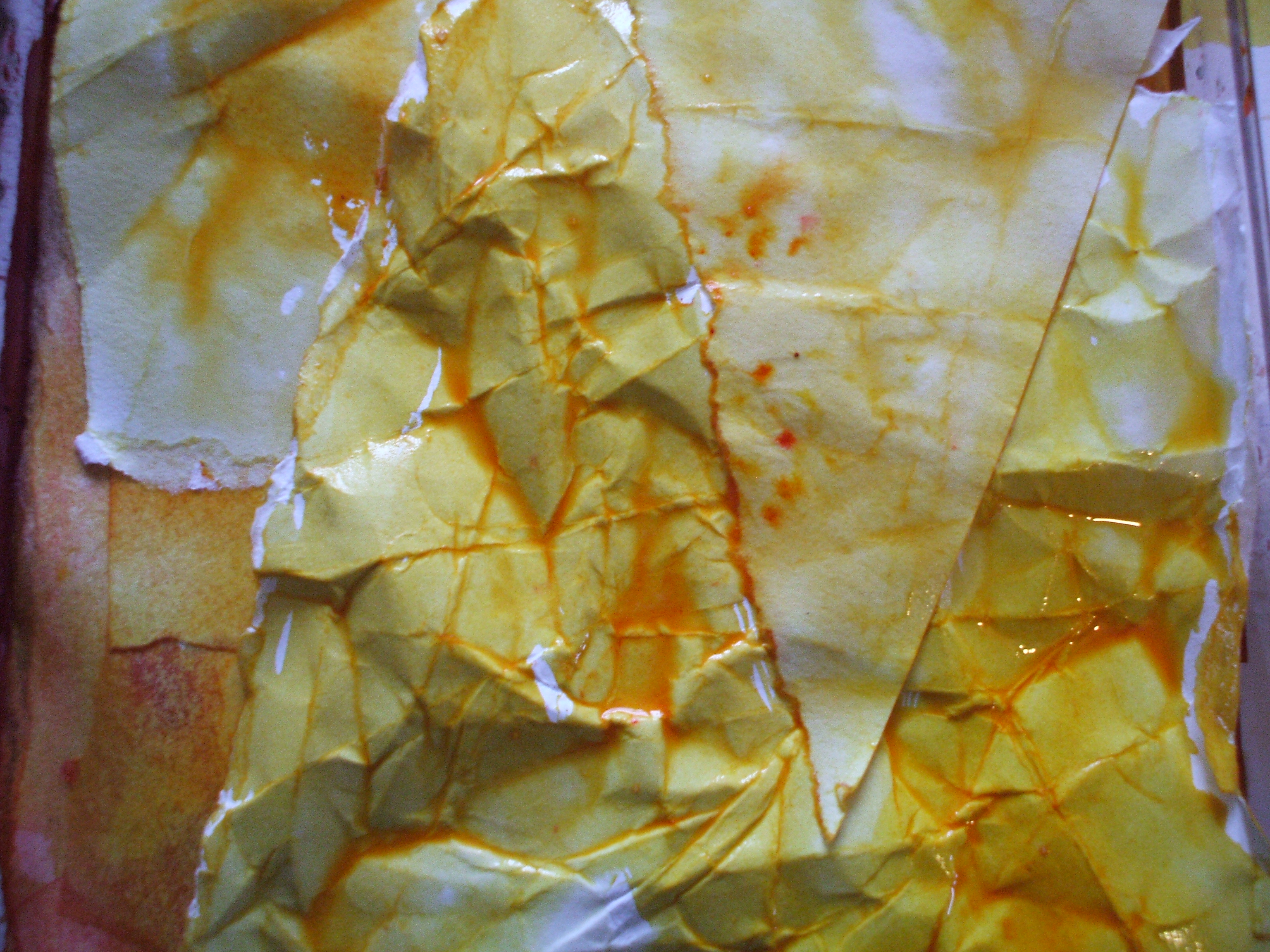
I love the crinkles formed in tissue paper when it gets wet n painty.

and the rivulets of ink, dabbed in a semi-dry state, neatly outlining themselves and marking their dribbly paths
doodles run around inky tidemarks, colors blend and merge the disparate
layers piled high, paper takes on a feathery appearance, ruffled.
Not starting out with a ‘plan’ to how a page will take shape is liberating.
It’s not a piece of art it’s a page in a book.

It’s just for today. I offer no judgement.

Free to let the colors and shapes just happen.

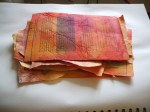
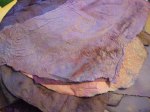
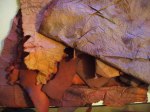
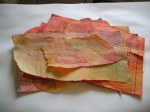
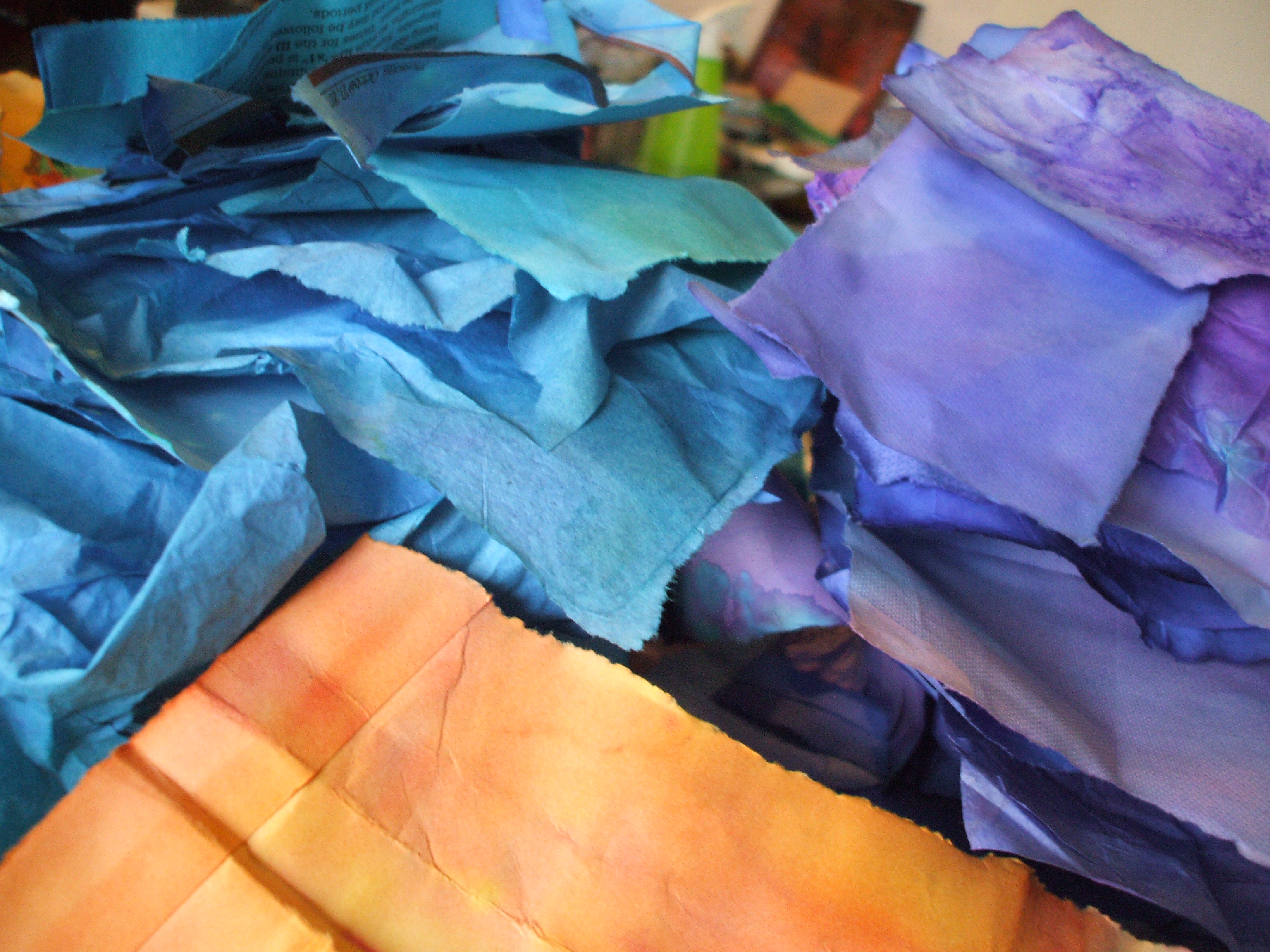
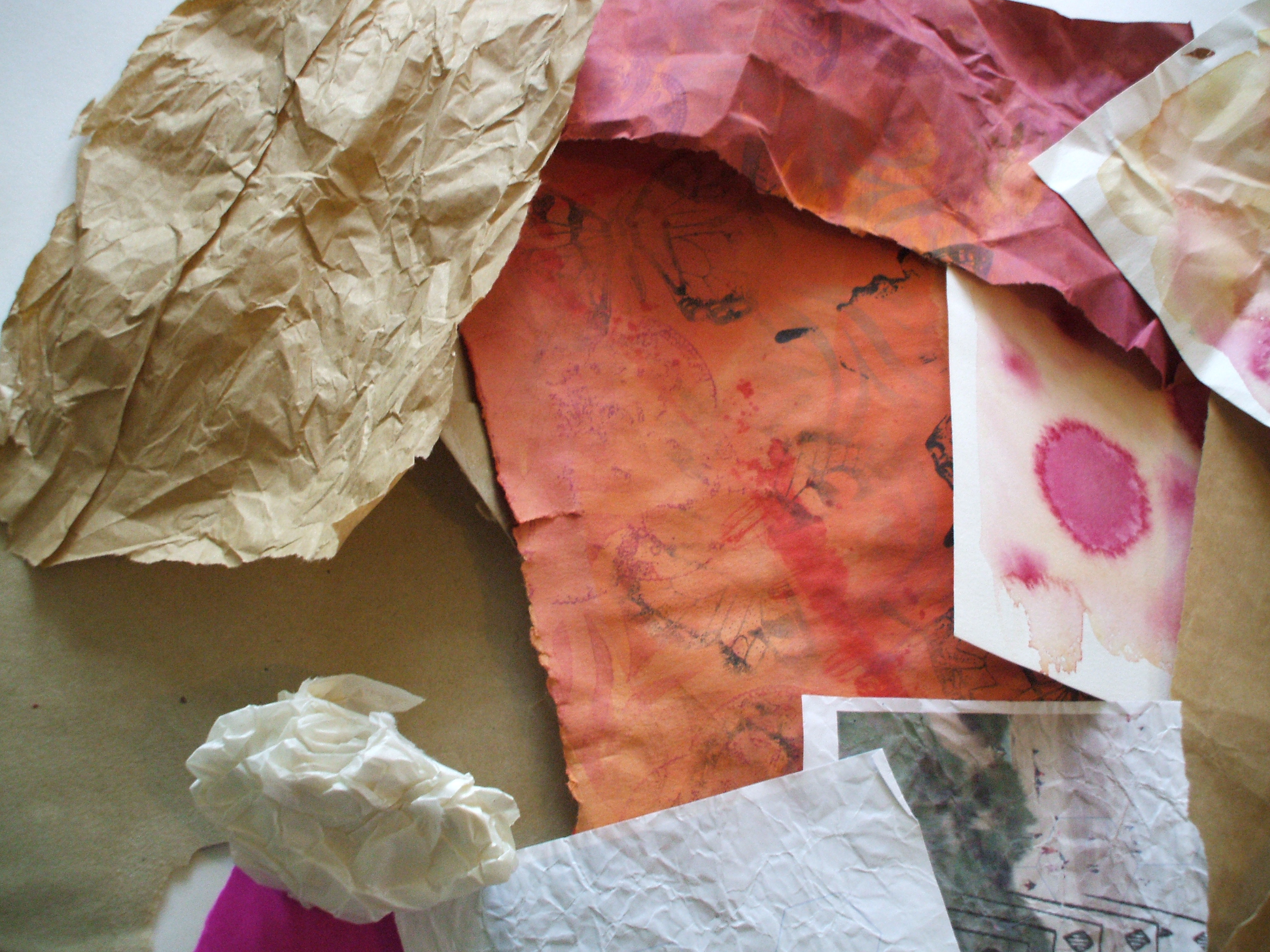
dyed paper!

Thanks to all who’ve joined me in these last few days of paper dying.

If you’d like to catch up on the story so far, it started here, went here, went off track awhile here, before showing up here.

It’s taken over my weekend, spilling into the weeks either side, and still there’s stuff soaking and hanging out to dry! But, that all comes later. First of all…..

First batches!


I should really photograph these in daylight, and with less wobble, but was too giddy with excitement I didn’t want to wait!

paper dying, part 3

As an aside, before I show you the latest happenings from the paper dying project: I never realised when I embarked on this it would become so all-consuming. I thought maybe a day of tearing, soaking, dripping, swishing, squishing and waiting would be followed up by a few hours of drying, unfolding, oooh-ing n ahhh-ing, then straight on to using and gluing and making.

Nope. Anyways, I’ll explain as I go along.

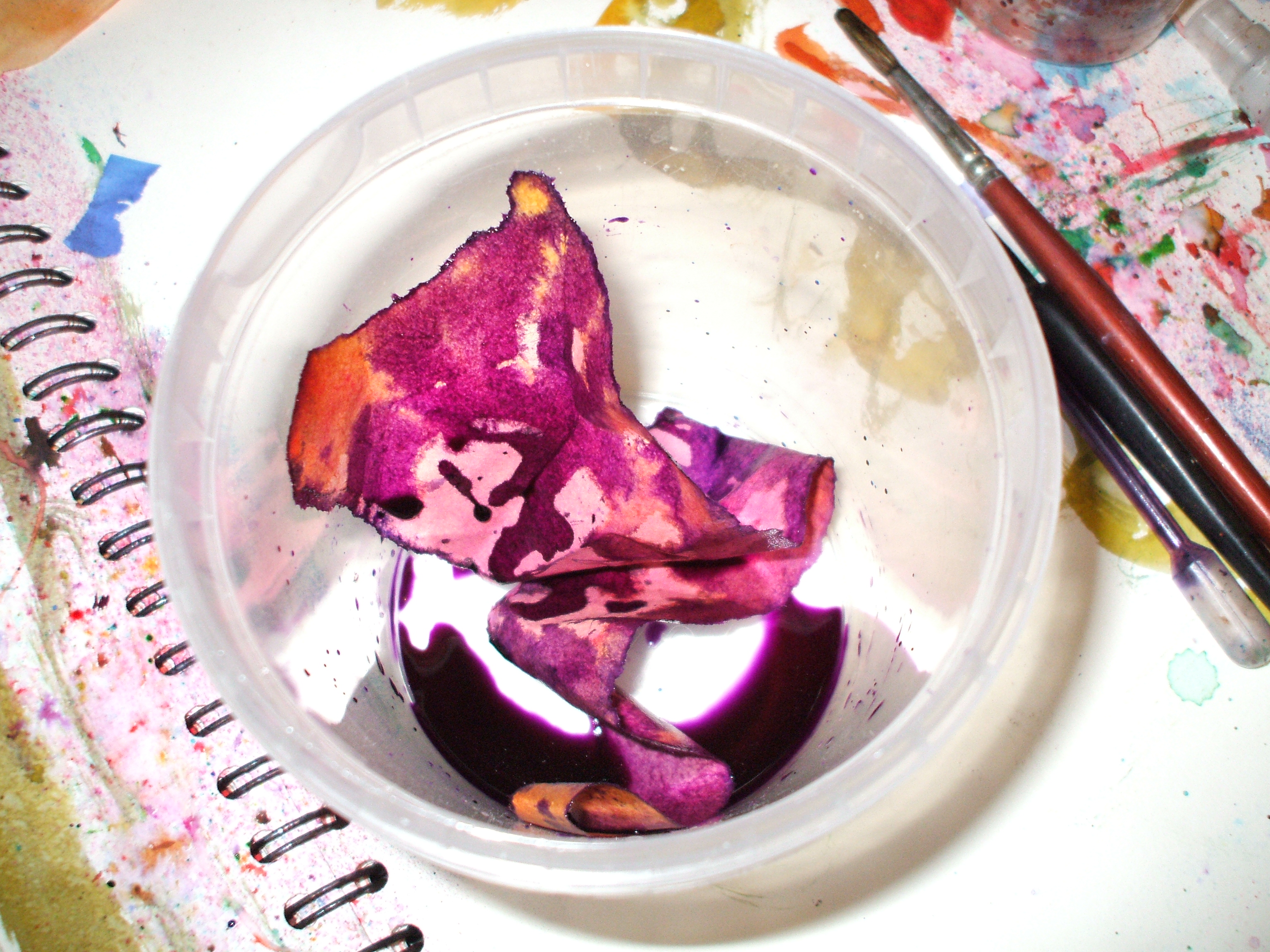
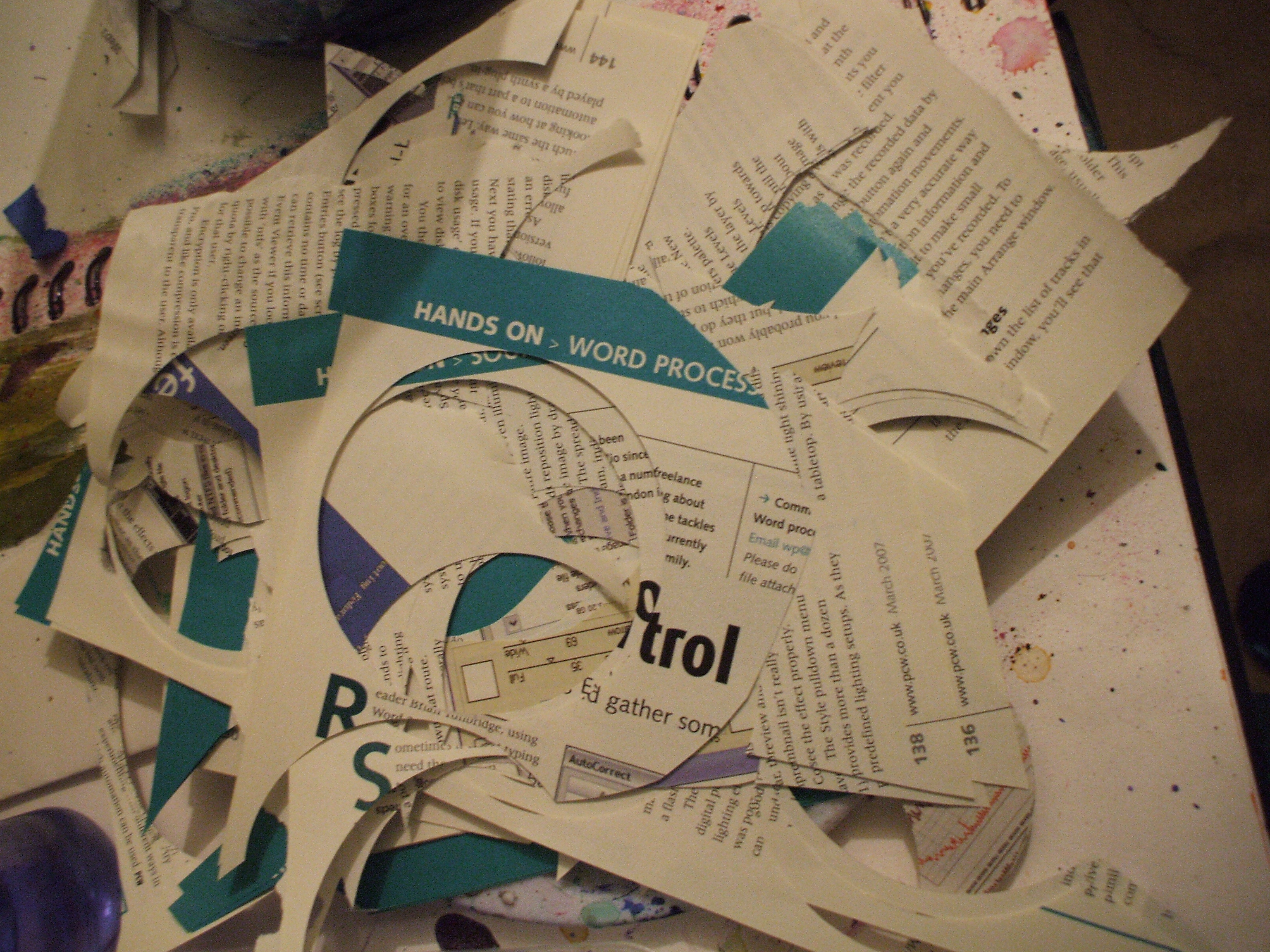
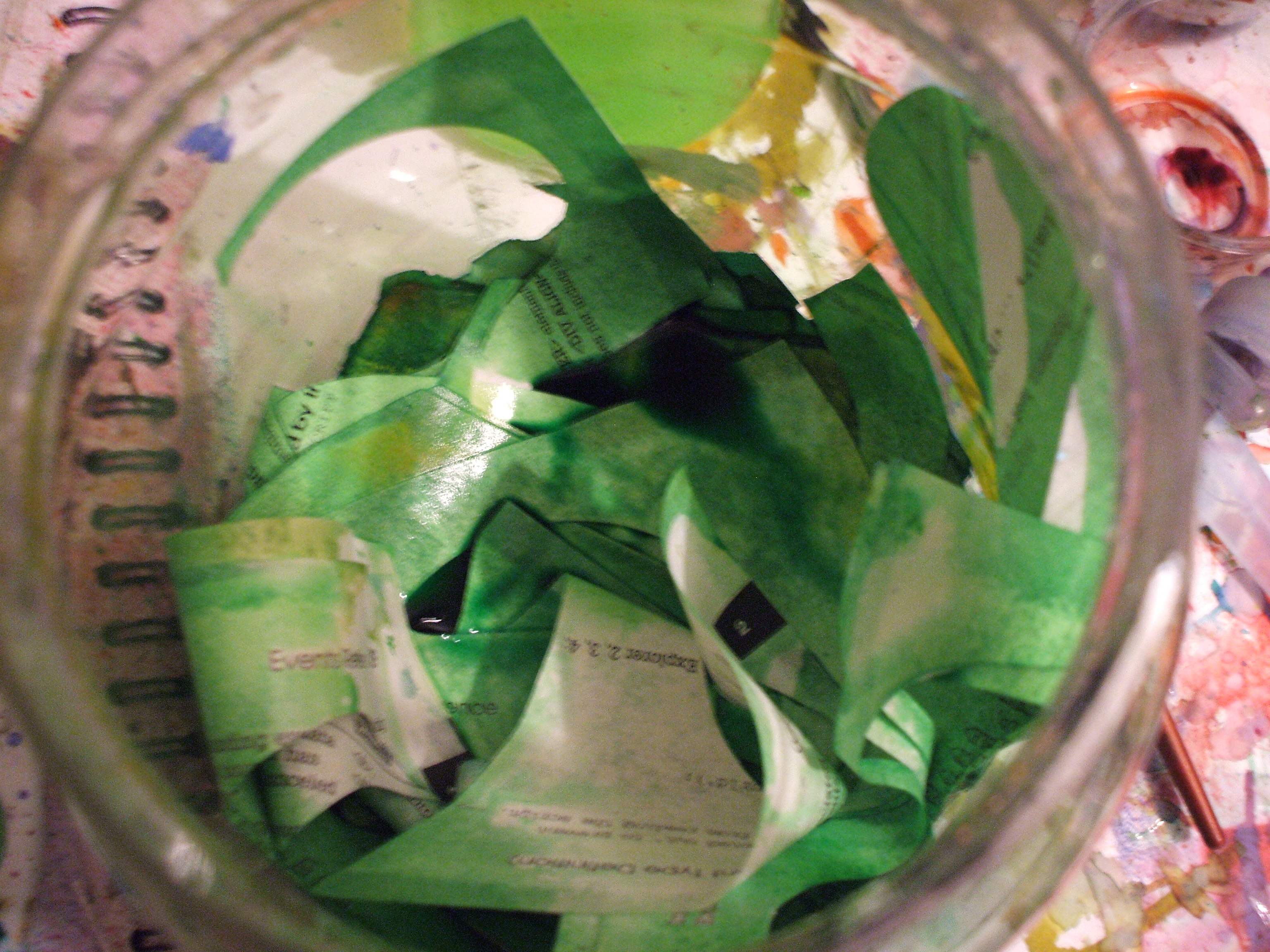
Having filtered out the papers deemed ‘not quite done’ I was left with a fairly substantial heap of partly-colored insipid stuff to re-dye. In a bid for something different I explored some new techniques.


Putting bits in a jar instead of a tray (done this with fabric, but not paper before)


Using pre-cut-out bits of paper


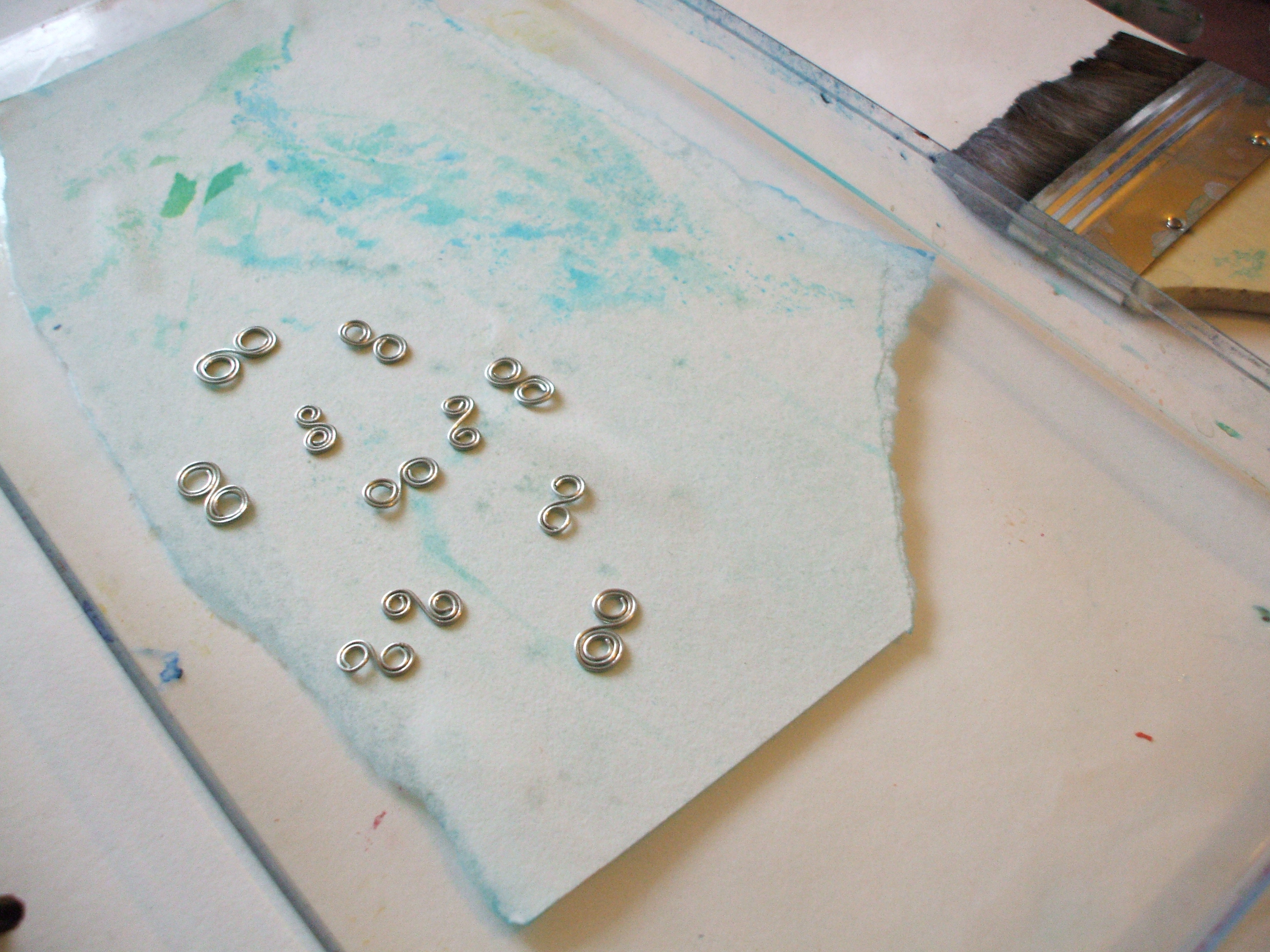
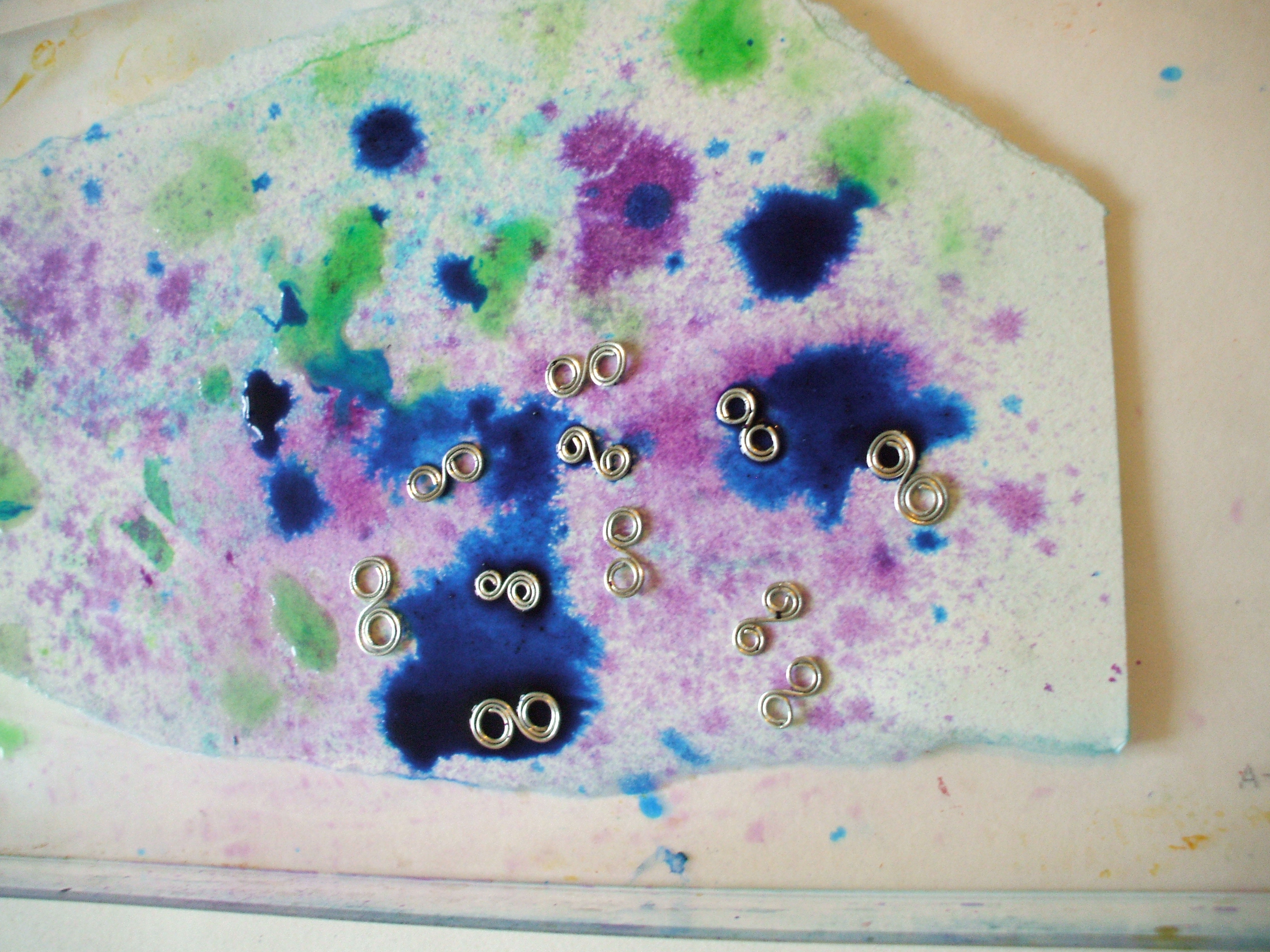
Using small things to add a bit of pattern. These wire coils were leftover from a previous project…


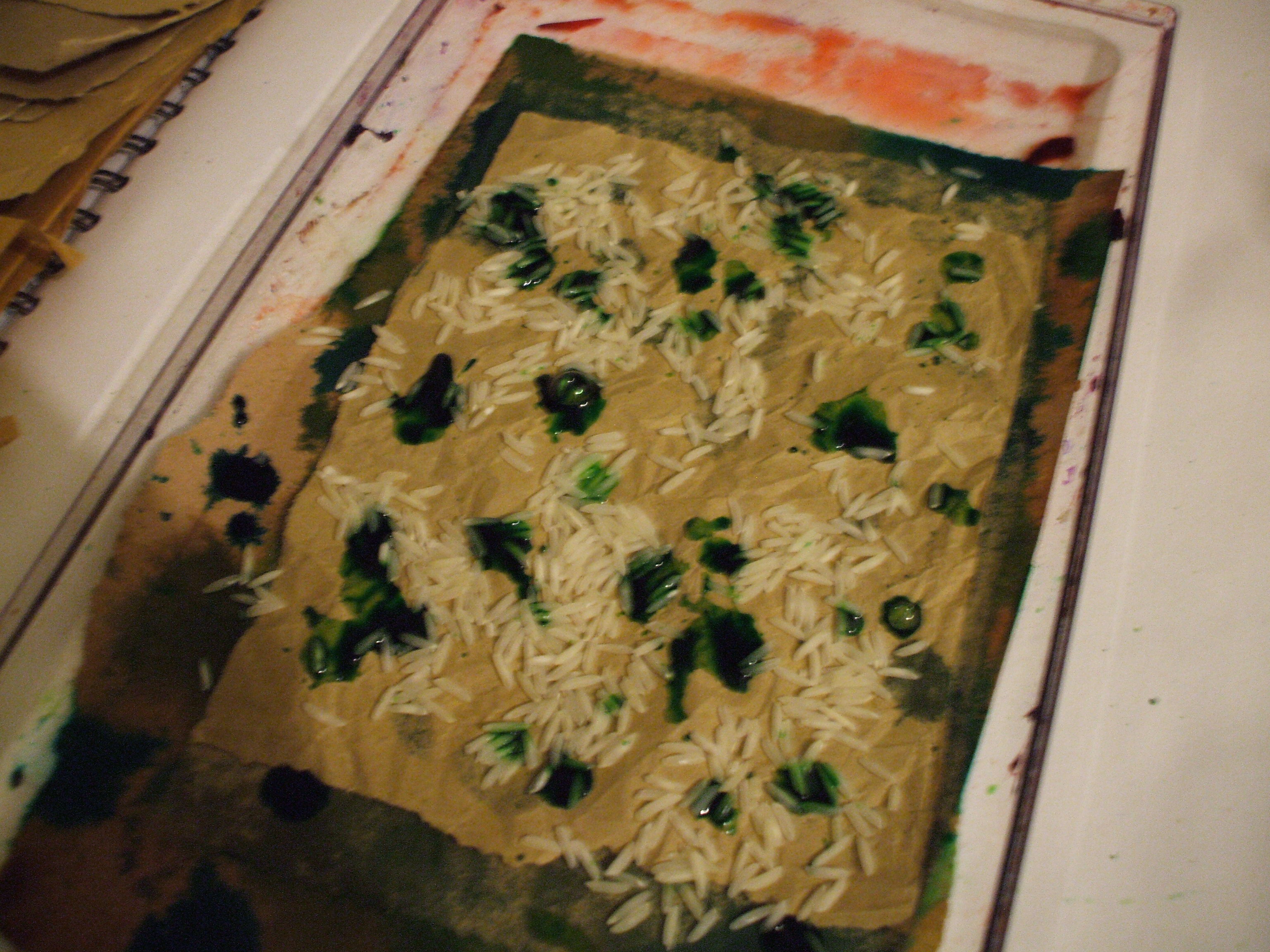
Ditto with rice (thinking – will absorb moisture as well as leaving rice-shape-patterns)


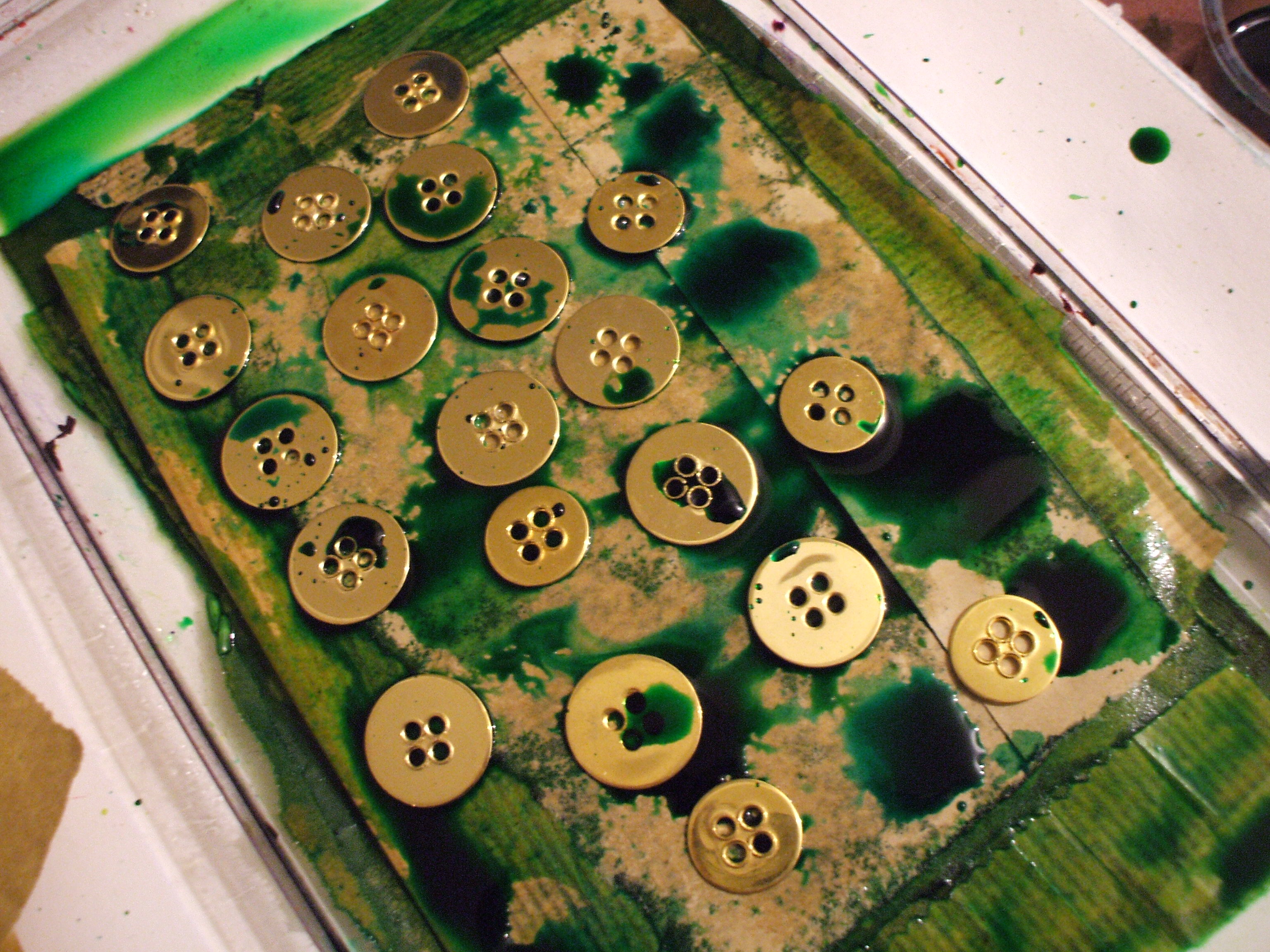
And again, with buttons


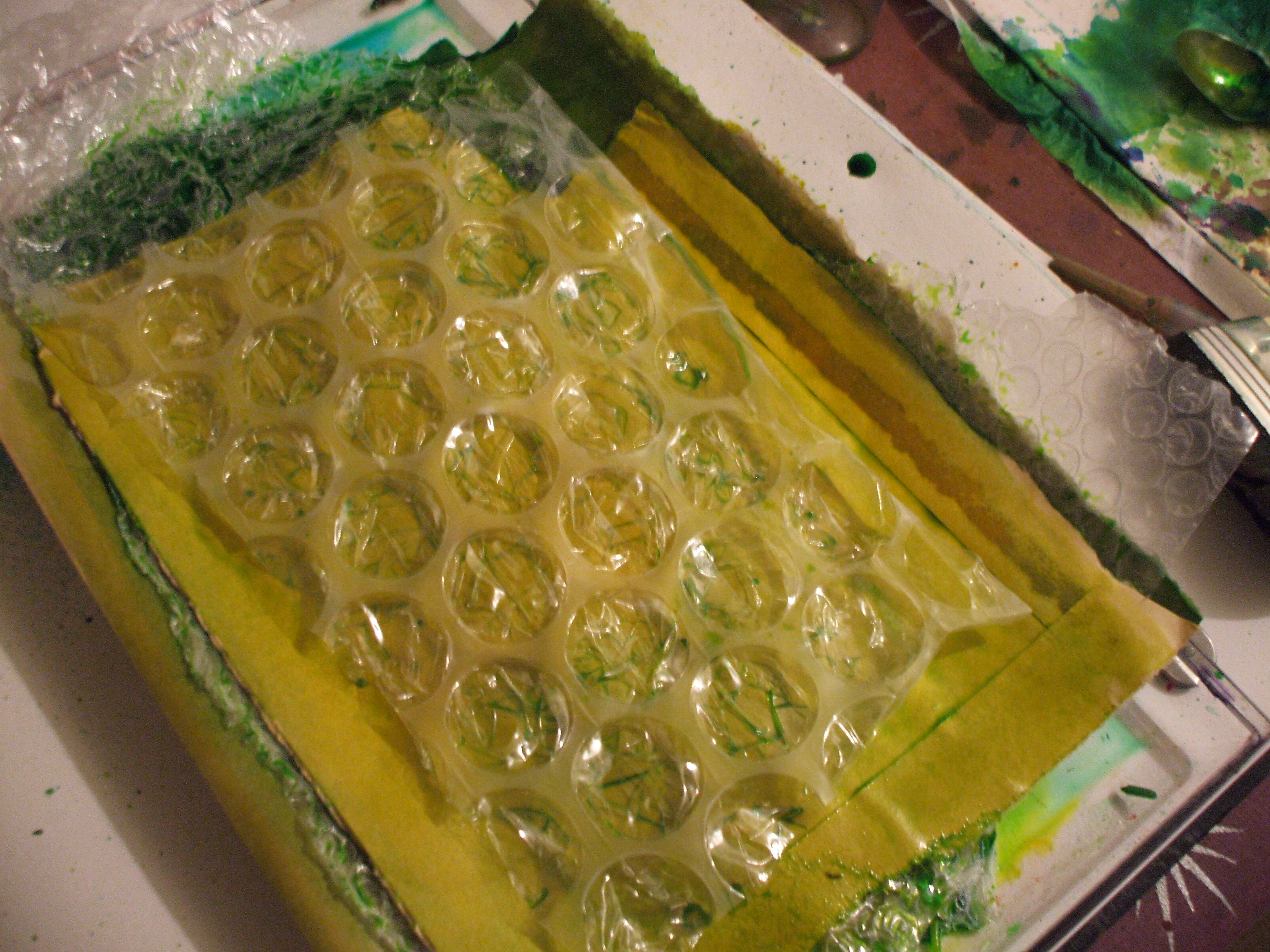
..Bubble wrap…


I haven’t looked at the latest results yet, check back later and find out if any of this worked out!!

off on a tangent & happy accidents

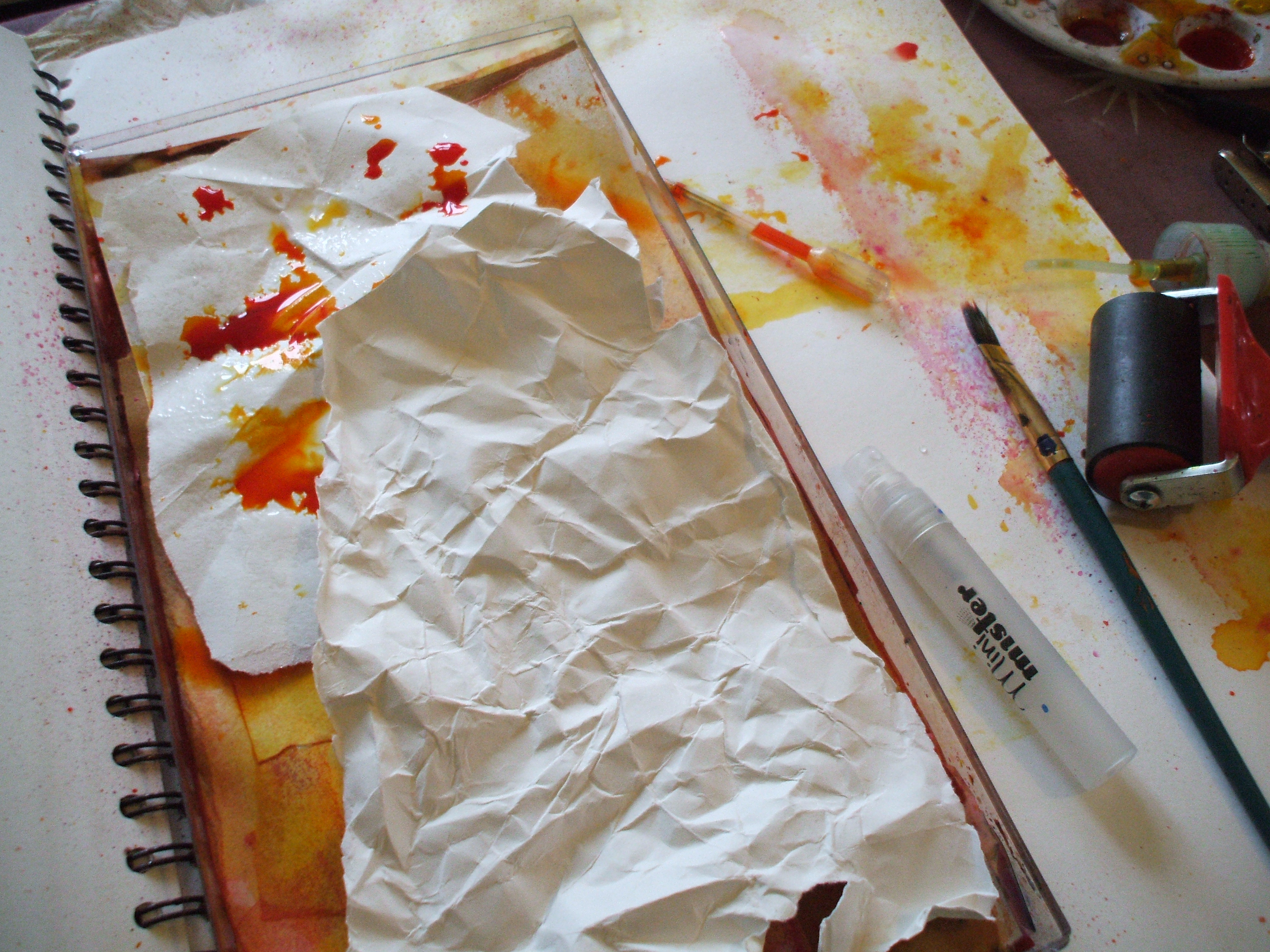
Using a blank page from my sketchbook to work on for the paper dying episodes has a threefold purpose:

  1. It’s a nice clean white (to begin with, at least) backdrop to photograph and record work in progress. A3 size book, opened up is a good sized working area.
  2. It protects my work surface (for now, an ironing board)
  3. It’s captured some gorgeous incidental art. Every stage of art, is art, right?

This slideshow requires JavaScript.


The little wire coils? Yeh, I’ll explain them later. Meanwhile I’ve got drying paper to go check on. BRB 😉

paper dying, part two

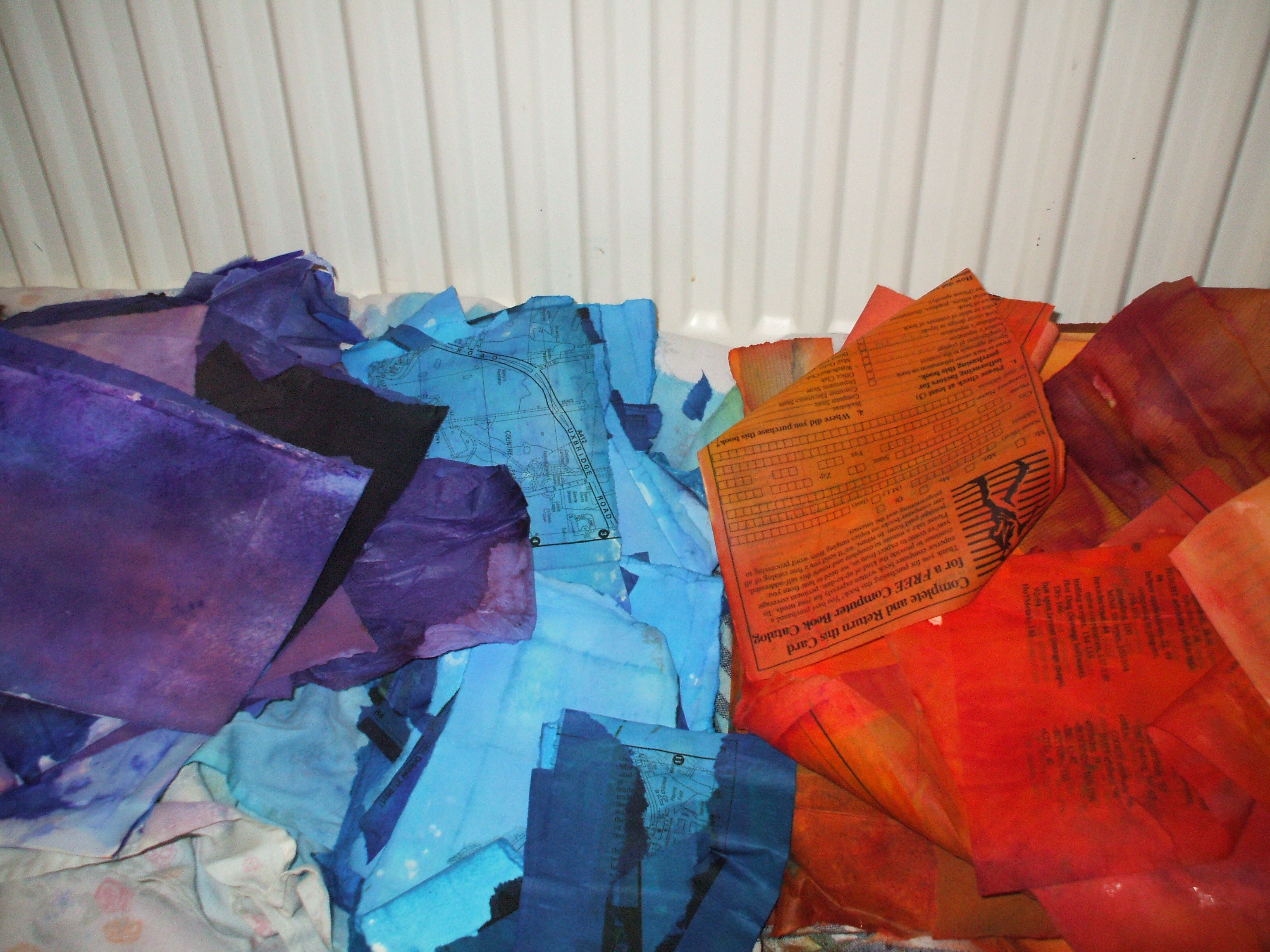
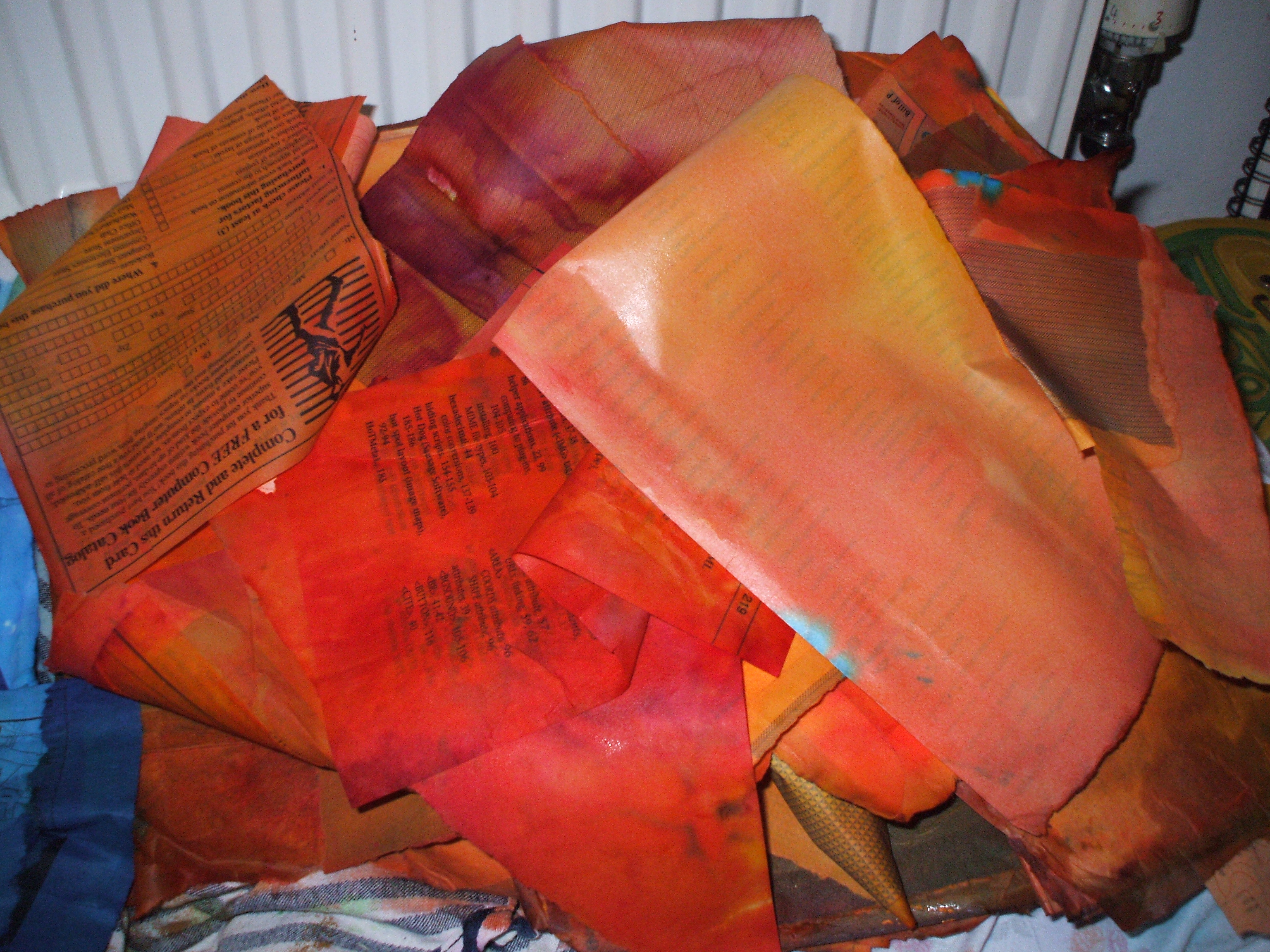
Last night I left the marinaded paper ready to sweat by the rad…Image

Today’s weather has supported my efforts by being quite cold, justifying use of central heating to warm room as well as dry my doings from yesterday.

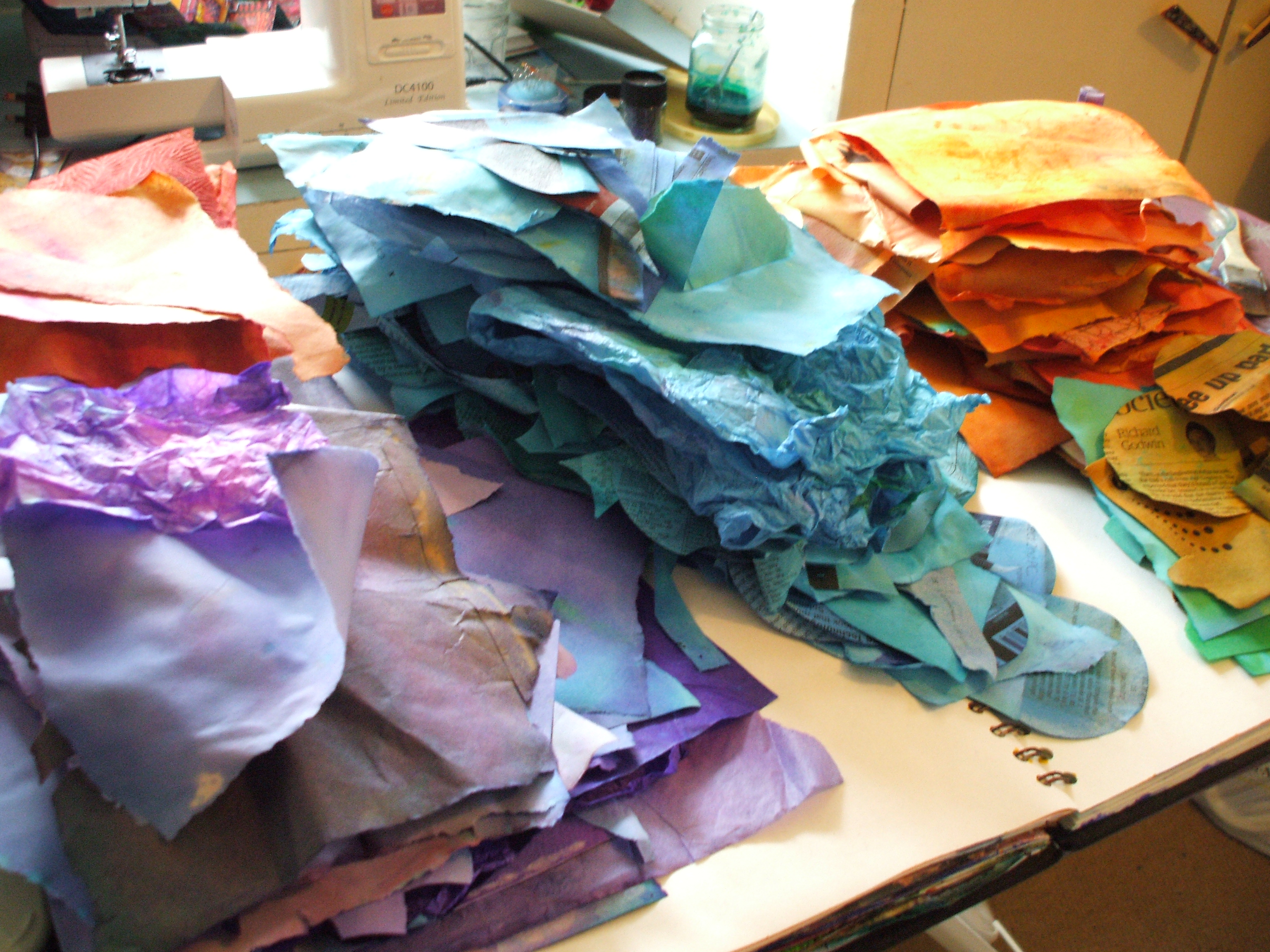
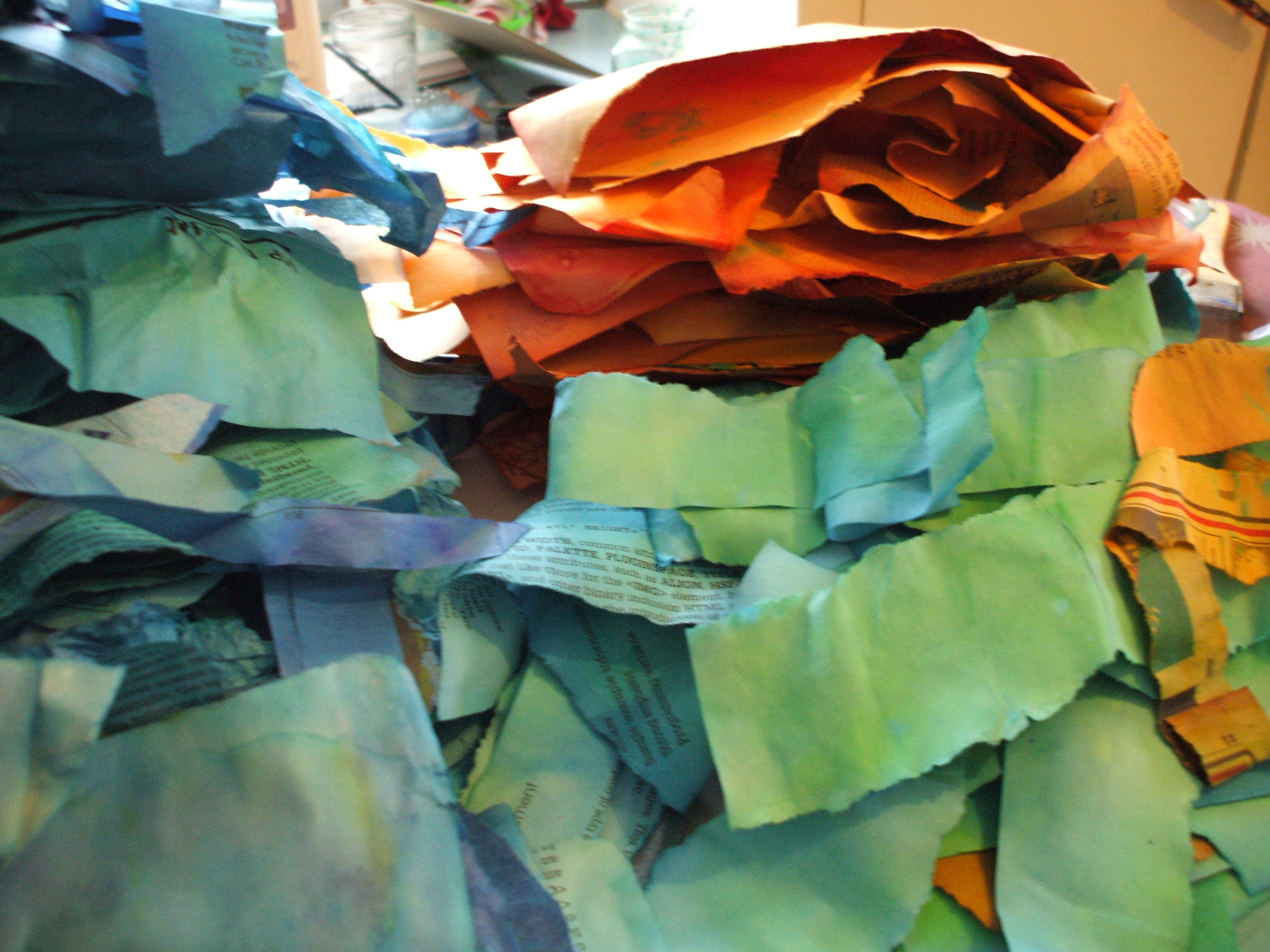
Carefully unpeeling the layers to get some air flow, I then sorted then into heaps to finish drying and admire

Image

ImageImage


Next stage is sort the ‘finished’ from the ‘not quite there yet‘, iron the former and carry on playing with the latter.

paper dying, part one.

With fabric and textiles, I’m rarely put off by material being the ‘wrong’ color, provided I can dye it. Lately I’ve expanded this reasoning to include paper too. Fortunately for the sake of this project I’d already squirreled away a stock of paper, and the only preparation to be done was some therapeutic tearing  and scrumpling.
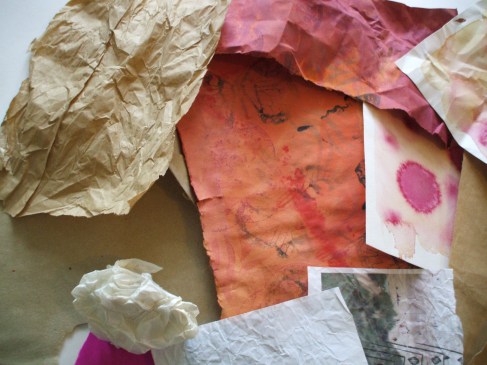
Image

Some paper (tough brown envelopes, cartridge, wallpaper lining, and watercolor) will tolerate heavy handed roughing up. Tissue, copier, newsprint and (my least fave) sugar paper just don’t have the same endurance, but will survive a lower level of scrunch.

The purpose of this is break up the surface, the scar lines offer a more porous surface for the dye to bleed through, and sometimes give a nice batik-y result.And sometimes they don’t. But we don’t care, we’re just here for shits and giggles.

Let the messy stage commence!
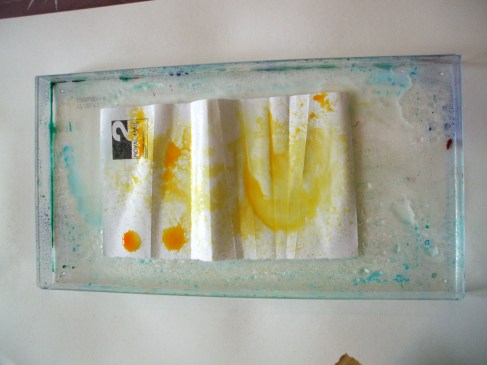
Image

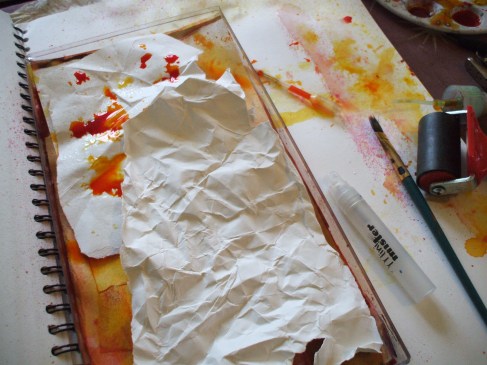
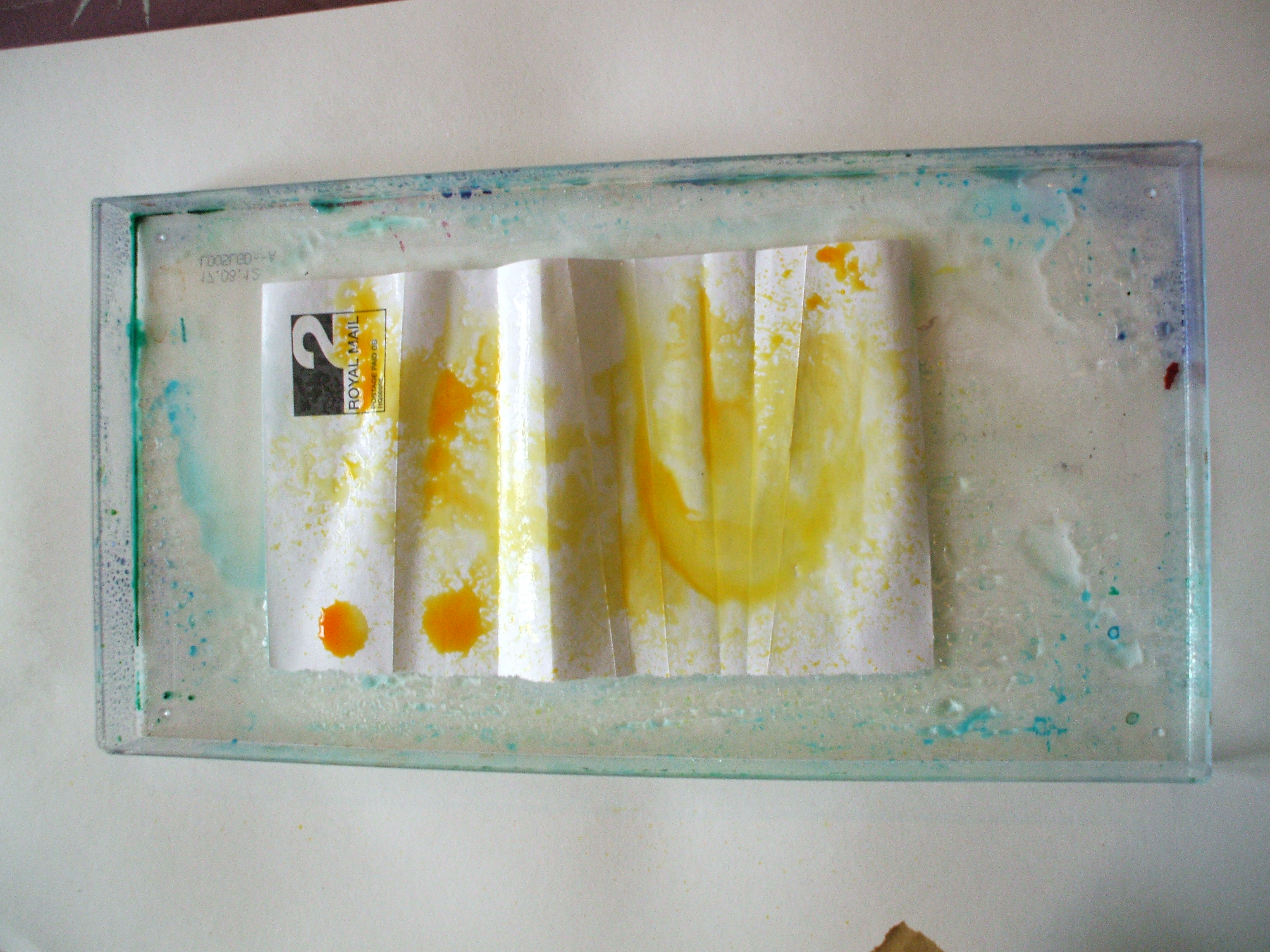
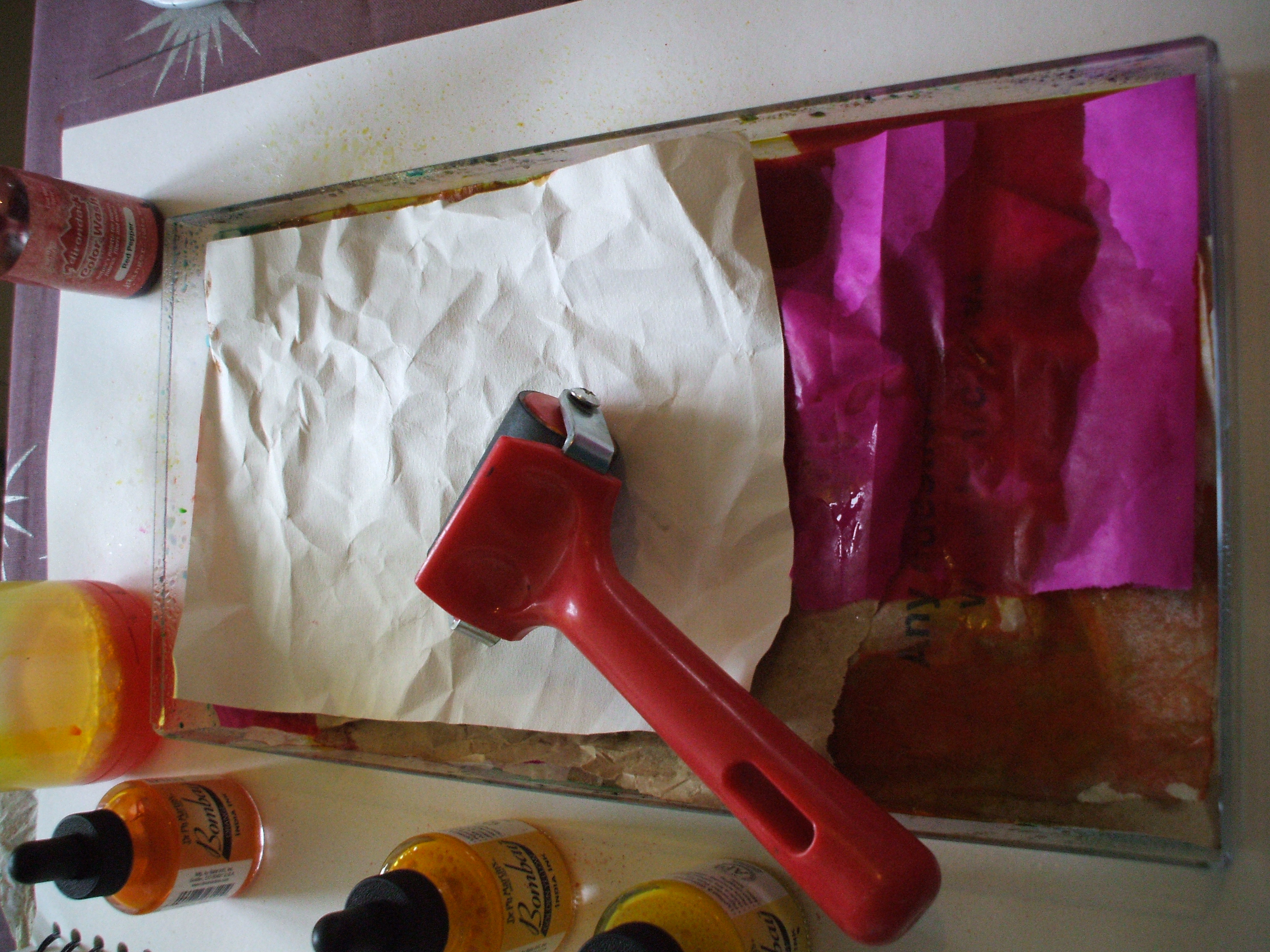
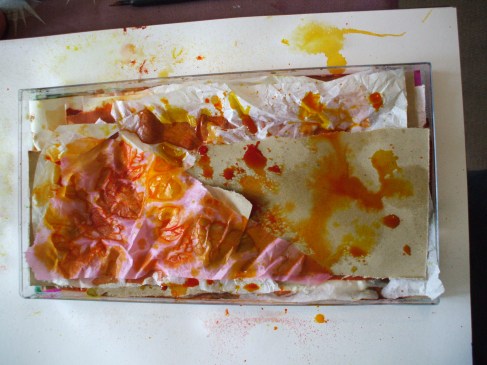
Plastic tray, bit of paper, swish with water, drips of dye & ink.
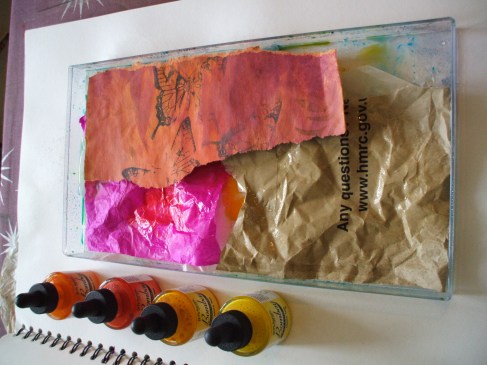
Image

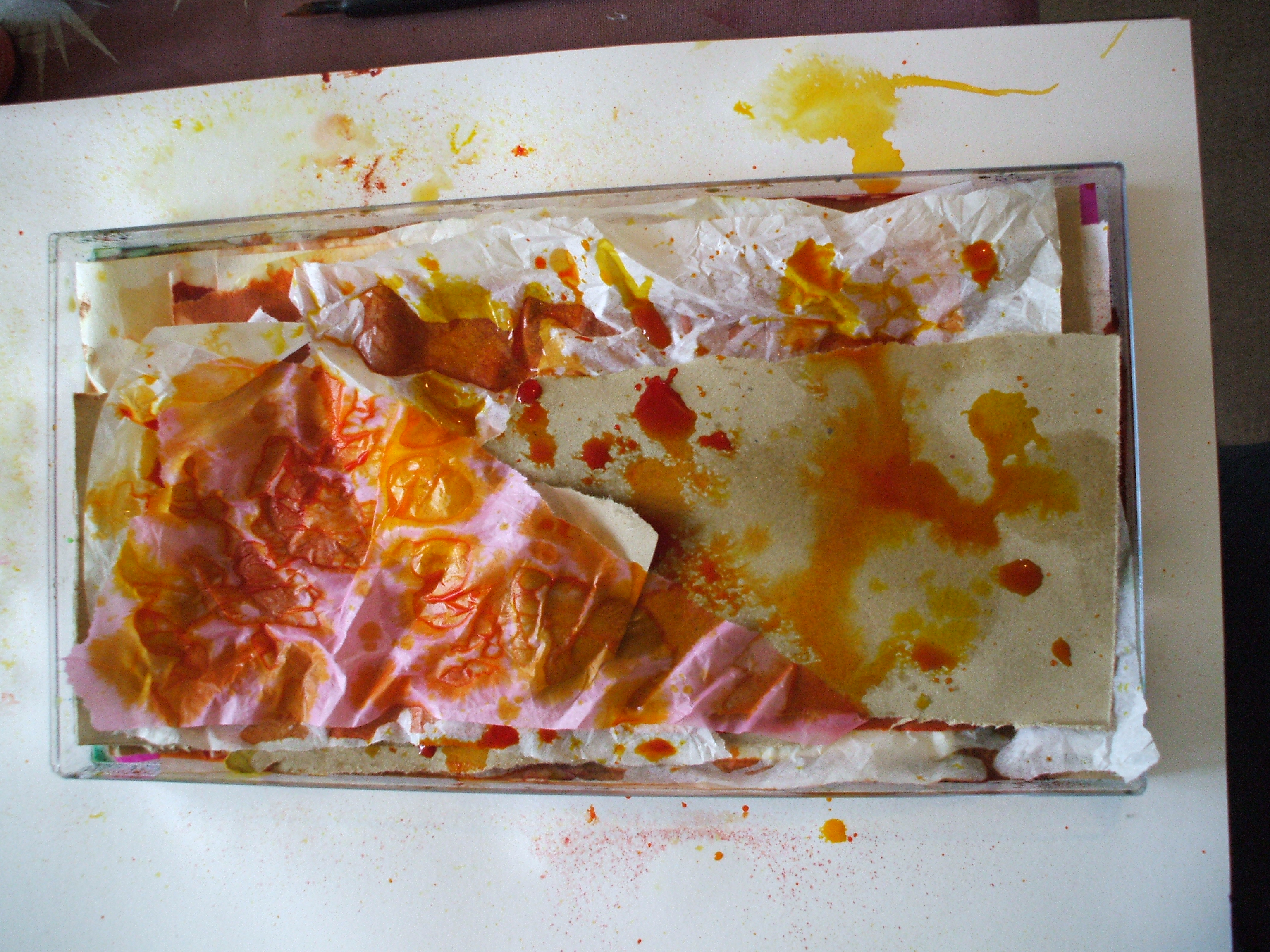
From here it’s a matter of layering (thinking ‘lasagna’, but without the food elements. Srsly, that would be a whole different result, and not what I’m after here at all)

Thicker acrylic based inks work best thinned right down with water,acrylic acts as an adhesive and if/when used thickly will gum the papers together into an unpickapartable cludge.
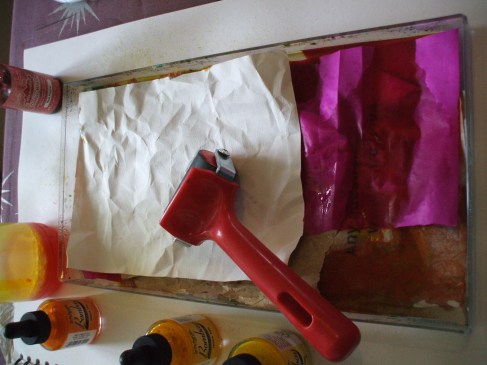
Image

Some layers through I like to give the soaking papers a bitova squish with a roller (brayer). The dye will penetrate the paper fibres better, and slop out of the edges of the tray if you’re not careful.
Image

Sometimes I pour off a bit of excess wet into a jar and reuse it further up the ‘lasagna’.

Image

See the batik-y thing going on? Yay!

Image

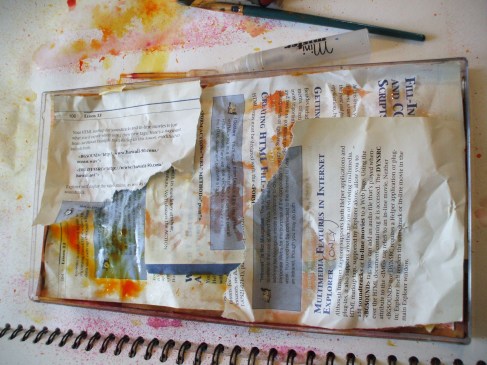
Onward n upward, paper, water, dye, swish, squish, paper, color, swish, etc
Image

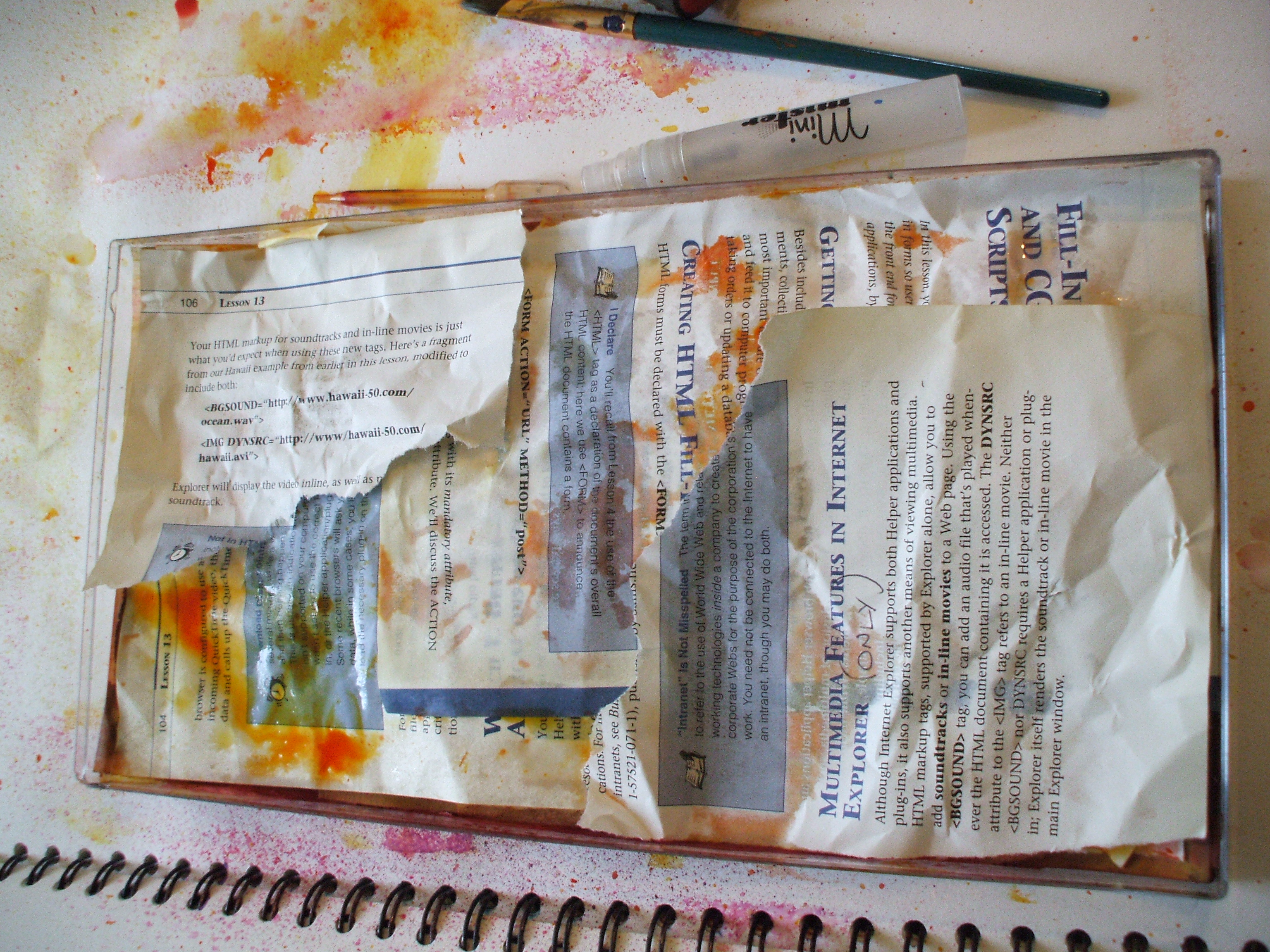
Disclaimer: no books were harmed in this production. Apart from this one. (Second hand and out of date when I got it, 15 year old book on web site building. ) Just saying. Books are my friends, and I never deliberately dismember friends, even in the name of art. Except for the very dead ones.

Image

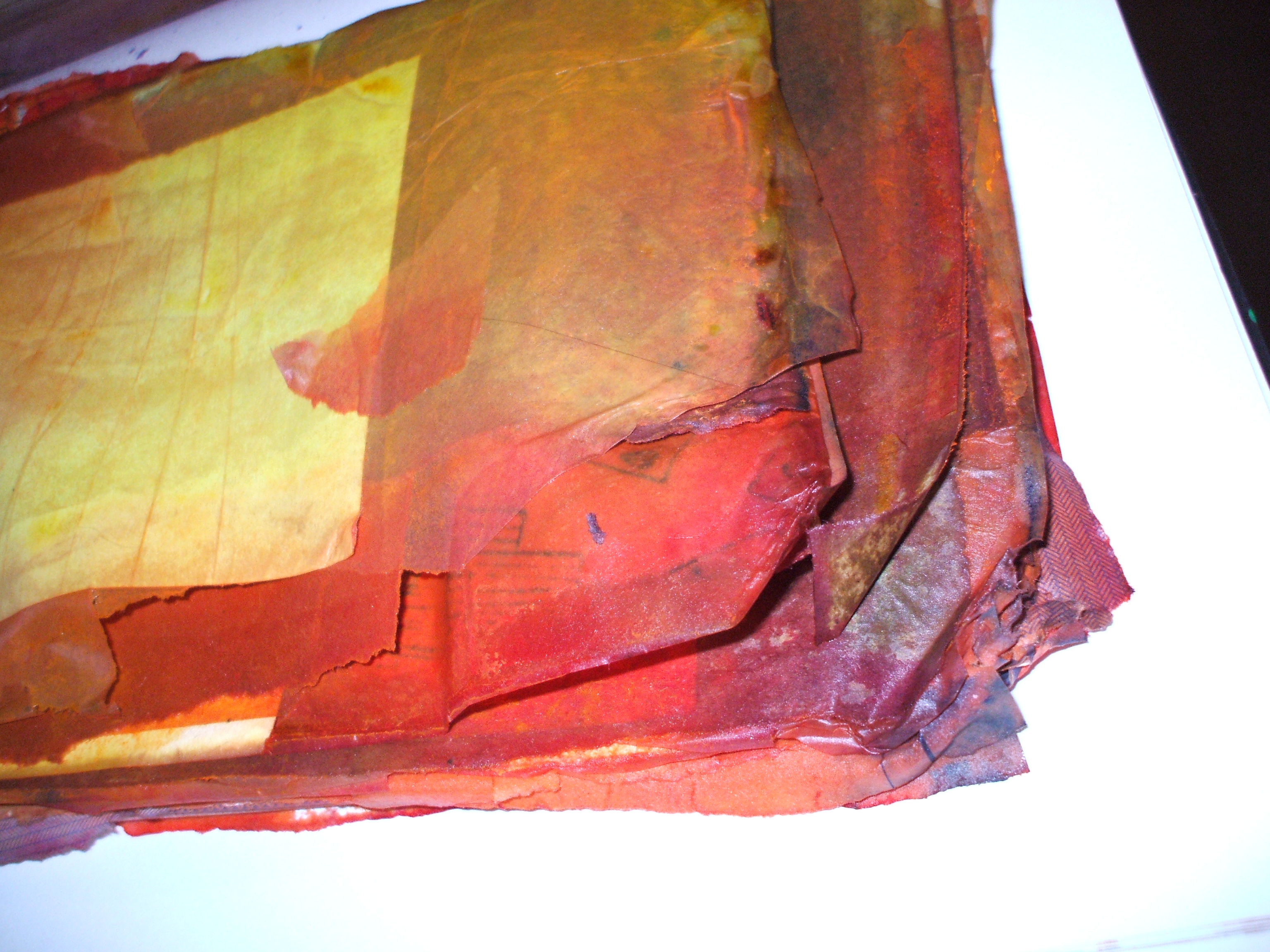
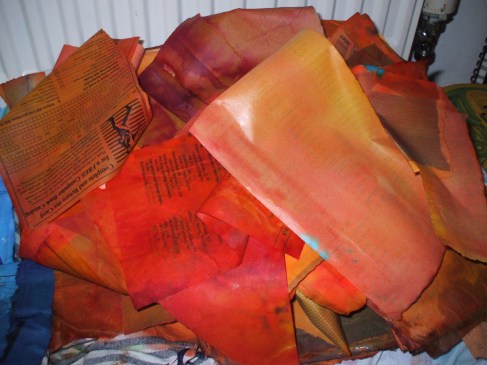
Some hours later, tray filled, excess juice drained, the soggy lump of color gets tipped out onto something porous (I used a selection of my finest knackered tea towels) and left to dry by the radiator. (If time and climate allow, sunshine will do the trick too)
Image

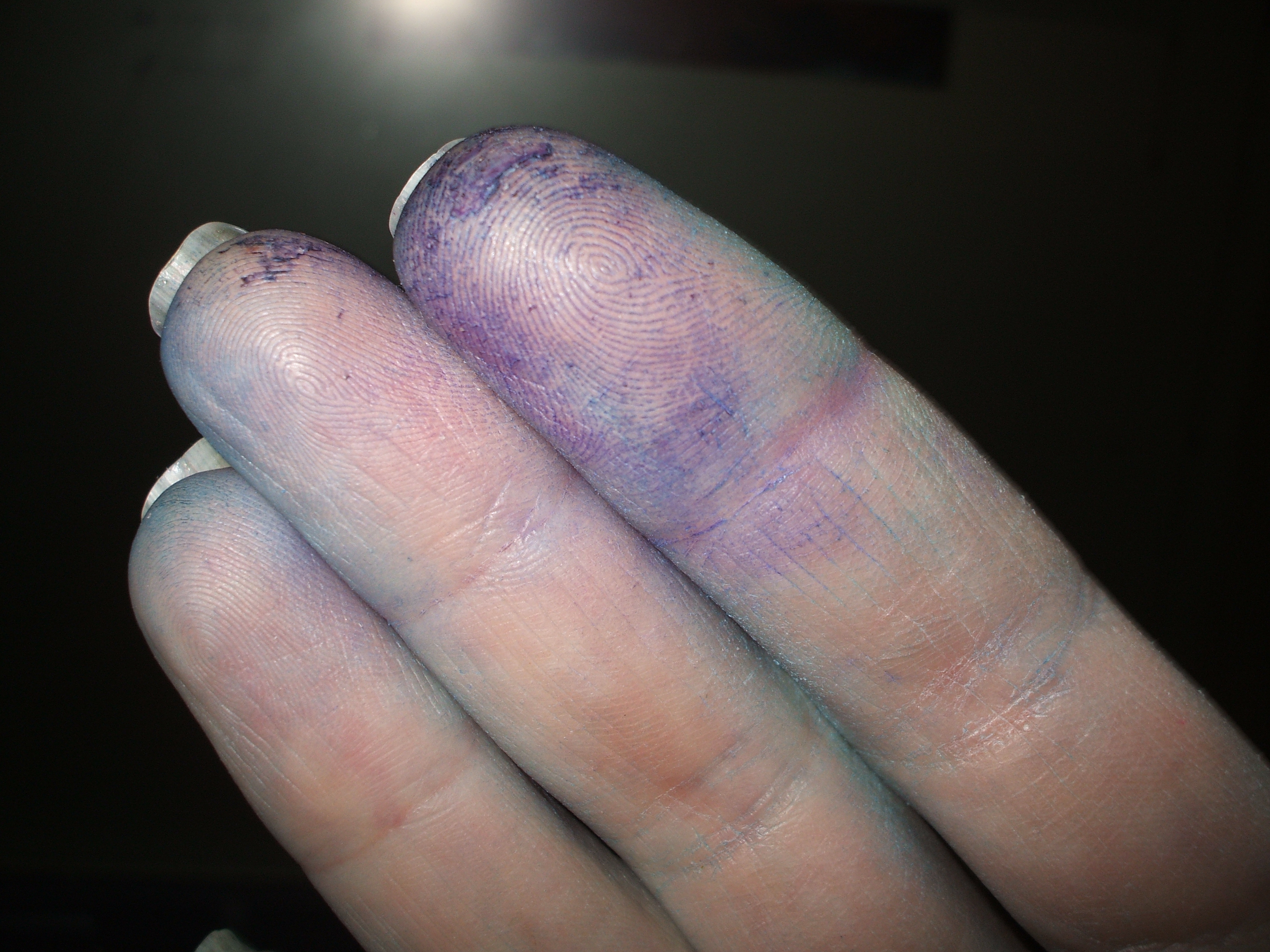
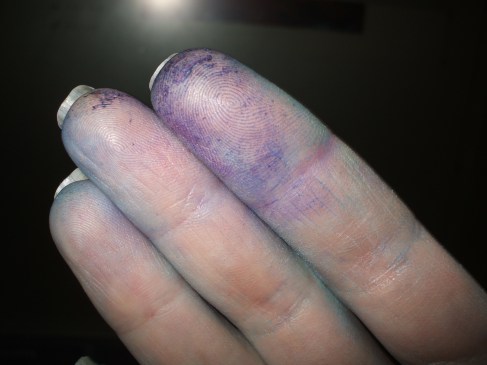
Oh, n you might wanna be wearing gloves for this. Or, like me, you might only remember this once you have dyed fingers…
Image


Design a site like this with WordPress.com
Get started